Eastbluff: a planned village with shared walls and several associations
Eastbluff is in central Newport Beach, with views over Back Bay and Newport Bay. A planning page about the area describes it as built in the early 1960s as one of the first planned residential villages on the Irvine Ranch, covering 619 acres with one community park. The edges of the area are informal, so give a street address when you call and not a boundary.
A village built around associations
The city's community association map lists three groups for Eastbluff: North Bluff Bayview Community Association, Eastbluff Homeowners Community Association and Eastbluff Apartment Owners Association. The city's evacuation zone list also shows Eastbluff Homeowners alongside the Belcourt associations and Newport Homeowners.
What that means for a leak
Where homes share walls, floors, roofs or water lines, one failure can wet a neighbor. That is a reading of how associations and apartments are set up, not a statement about any building. Whether your unit shares a wall or ceiling depends on your building.
Owners and renters both live here
Citywide, the Housing Element says 43.5 percent of occupied units are renter-occupied, and that 67.9 percent of renters live in multi-unit buildings. If you rent, your landlord or property manager usually needs the first call.
Not a harbor-edge story
The city's tide advisory names low-lying harborfront areas, and Eastbluff is not among them. Water damage here is much more likely to start with a pipe, an appliance, a roof or an air conditioner.
Water is coming through a wall or ceiling: what to do first
Find the source if you can and stop it. Close the shutoff at the fixture or the main valve for your unit. If water is coming from a neighbor's unit above, you cannot shut their line, so move people and belongings clear, catch what you can and call the association, the management office or your landlord. Then call (949) 670-0939 and describe the damage, the street and your building.
Treat water near electricity with care. Turn off power to wet areas only if the panel is dry and you can reach it without standing in water. If water is coming through a ceiling light, stay out of the room. A gas smell or sparking wiring means you leave and call 911 or the utility first.
Photograph every wet surface and the source. If the water came from another unit, photograph that side too when you can do so safely. Send children and pets to a dry room.
Water dripping from the unit above? Call and describe it
Ring (949) 670-0939, tell the line what is wet and where you live, and ask what to do in the meantime.
Getting ready before the drying equipment goes in
In a shared building, preparation includes some phone calls. These steps save confusion later.
Notify the right office
Call your association, building manager or landlord as soon as you can. They may need to shut off a shared line, enter a neighboring unit or approve work in common areas.
Name the units involved
Write down which unit the water came from, which units it reached and which rooms are wet. That list guides where readings are taken.
Photograph and date everything
Take wide shots and close shots of wet ceilings, walls, carpet and belongings. Dated photos help document the loss.
Empty the lowest shelves
Move boxes and books off wet floors and out of closets that share a wall with the leak. Cardboard wicks water upward.
Clear the equipment path
Extraction units and air movers need a route from the door to the wet room. Check parking and building access with management.
Note quiet hours and access rules
Drying equipment runs for days, and some buildings have rules about noise and access. Tell management before it starts.
Where water damage tends to start in a village of shared buildings
These are causes that fit shared buildings and utility closets in general. They are not counts of losses in Eastbluff, and your own building decides which apply.
Water heater closets
A tank sits in a closet or alcove that often shares a wall with a bedroom or hallway. A slow weep can wet the base for weeks, and a failed tank can flood the whole floor. The water heater leak cleanup page explains the work.
Air conditioner condensate
A clogged drain line or a full drain pan sends water into the ceiling or the closet around the air handler. See AC leak water damage for how that dries.
Dishwasher, washer and fridge lines
Supply hoses and drain connections fail behind appliances where nobody looks. The appliance leak water damage page covers the signs.
Leaks from the unit above
Water from an upstairs bathroom or kitchen reaches the ceiling below first. Who pays is a question for the people who own the source, so ask your association and insurer.
Roof and heavy rain
The city says intense sustained rain every few years causes flooding, and that is a citywide statement. If rain comes through a roof you share, report it to the association.
Drying across shared walls, ceilings and carpet
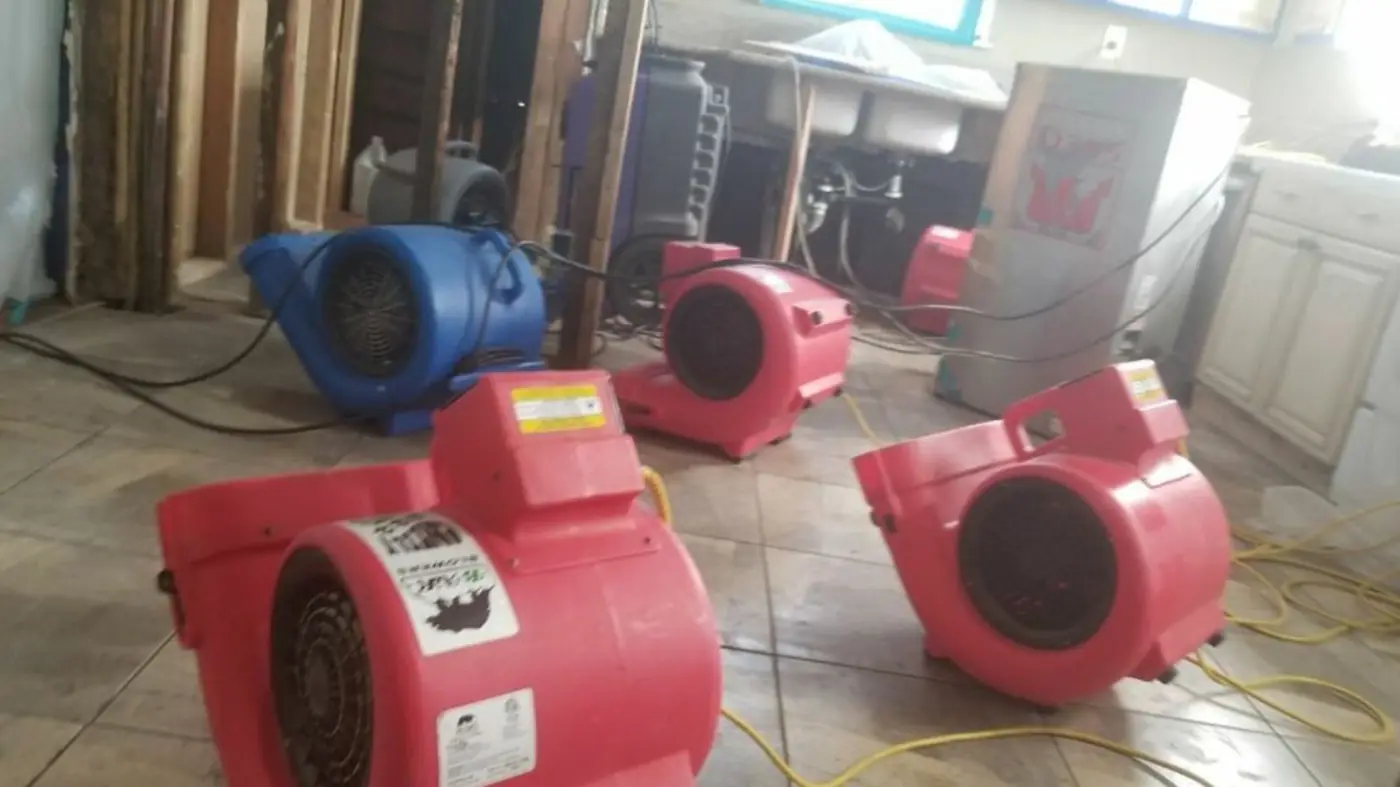
Extraction units and wet vacuums remove standing water from carpet and pad. Moisture meters and a thermal imaging camera then show how far the water traveled, including into the wall between two units or the ceiling cavity above.
Air movers and LGR dehumidifiers dry the structure, and readings are taken each day until wet materials match a dry reference. In shared buildings, equipment may also be needed in a neighboring unit, so access has to be arranged with the people who live there.
The EPA advises drying water-damaged areas within 24 to 48 hours to prevent mold growth, so do not wait for a dispute over responsibility to be settled before drying starts. Mold, if found, is assessed after drying, and mold remediation is its own service. The published standard is ANSI/IICRC S500.
Who to notify and what to document
Check your policy and ask your insurer what it covers. Photographs, dated notes, moisture readings and a list of damaged items all help. Standard homeowners insurance does not cover flood damage, since flood is a separate policy. Whether the association's policy or your own covers a given part of a shared building depends on your governing documents, so ask the association and your insurer.
Notify the association or management first for anything involving a shared wall, ceiling or line, and your landlord if you rent. For water in the street or at the city meter, the city's water and sewer emergencies line is (949) 644-3011. The water bill is the place to confirm whether the city or another district, such as Irvine Ranch Water District or Mesa Water District, serves your address.
Ask the city Building Division whether your repair needs a permit, and check any contractor's license on the state licensing board's lookup.
Matching the service to the leak
The right page depends on what failed and what got wet.
Appliances
A failed hose or drain line is covered under appliance leak water damage.
Air conditioners
Condensate overflow and a leaking air handler fall under AC leak water damage.
Water heaters
Tank leaks and the closet around them are described in water heater leak cleanup.
Wet carpet
Pad and carpet decisions are explained under carpet water damage.
Wet framing and cavities
When water has gone into walls or floors, structural drying explains the readings and the equipment.
Other parts of Newport Beach
This page covers Eastbluff. For the wider picture of water damage cleanup across Newport Beach, see the home page, and for everywhere this phone line covers, open the service area page. Also see Newport Heights or Corona del Mar for other parts of town.
Eastbluff water damage questions
Is emergency water removal available in Eastbluff?
Call (949) 670-0939 and describe the damage, your street and whether the water is still running. No time promise comes with the call, so use the wait to stop the source, notify management and take photographs.
Water is leaking into my apartment from the unit above. What now?
Tell the building manager or your landlord right away, since only they can reach the source in another unit. Move belongings clear, photograph the damage and call (949) 670-0939 to ask what to do about the wet ceiling.
Who do I call if the water is on the street or at the meter?
The city's water and sewer emergencies line is (949) 644-3011, and the Police Department line, (949) 644-3717, is listed for after hours. That covers the public side. Anything inside the building is a separate call to (949) 670-0939.
Does my HOA or my own insurance cover a leak between units?
It depends on the cause and on your association's governing documents, so ask the association and your insurer. Flood is a separate policy from standard homeowners coverage, and the National Flood Insurance Program generally takes effect 30 days after purchase.
Which associations exist in Eastbluff?
The city's community association map lists North Bluff Bayview Community Association, Eastbluff Homeowners Community Association and Eastbluff Apartment Owners Association. Check your closing papers or lease to see which one applies to you.
Can an AC condensate line really cause ceiling damage?
Yes. A clogged drain line or full drain pan sends water into the ceiling or closet near the air handler. Keeping AC drain lines clear is part of the EPA's moisture guidance.