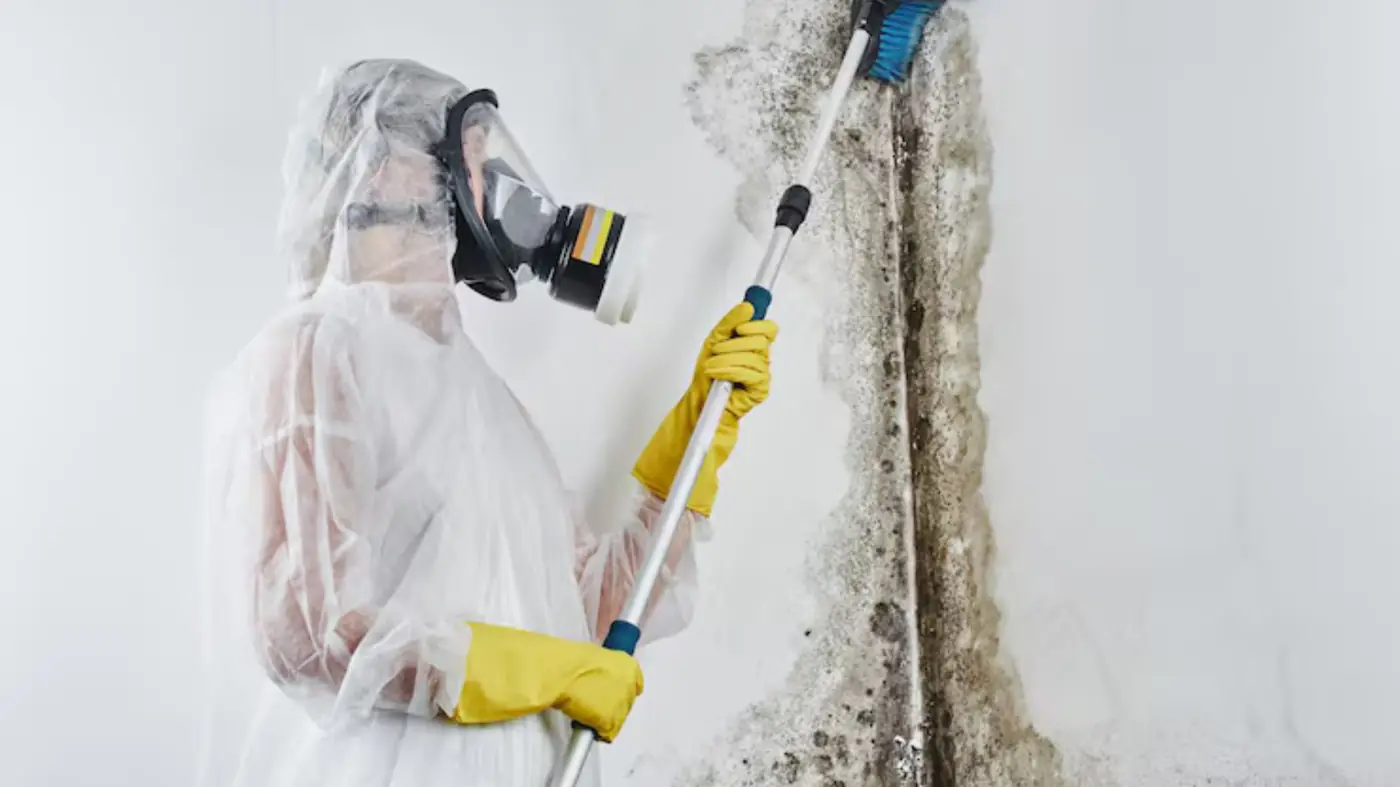
Mold Remediation: Containing And Removing Mold After Moisture
Mold remediation is the process of sealing off an affected area, removing the growth and contaminated materials, cleaning what stays and drying the space. In Newport Beach, we send licensed and insured professionals for this work, and the published standard for it is ANSI/IICRC S520. Ask any company whether its crews work to S520.
The work is only half the job. The other half is the water: no cleanup lasts if a leak, a clogged drain line or a damp wall cavity keeps feeding the same spot.
Musty Smell, Dark Spots On The Ceiling Or Bubbling Paint?
If a closet smells musty, a ceiling has dark spots, or paint is bubbling on a wall, something in that wall or ceiling has been wet. Those are the signs most callers describe before they say the word mold. That situation is what mold remediation exists for, and the first step is finding out how much of the material is damp and how far the growth reaches.
Found growth or a damp wall?
Call (949) 670-0939. Same-day response when available, with the scope and price explained before work starts.
Mold Removal and Black Mold Cleanup
Black mold is a common name for dark-colored growth, but color alone does not identify what is on the surface. Whether the growth is black, green or white, the approach is the same: stop the moisture, contain the area and remove the contaminated material.
Containment barriers of plastic sheeting seal the room, and a negative air setup with a HEPA air scrubber keeps spores from drifting into other rooms. Crews wear respirators, gloves and eye protection. Hard surfaces such as studs and tile are scrubbed with detergent and water, then dried.
Porous materials such as drywall, ceiling tile and carpet are often cut out and bagged rather than cleaned, since the growth reaches into them. Painting or caulking over mold does not remove it, and the EPA advises against routine use of bleach or other biocides. A HEPA vacuum finishes the surfaces before the room is dried.
Mold After Water Damage
Mold needs moisture. The EPA guidance is to dry water-damaged areas and items within 24 to 48 hours, which is why fast drying after a leak matters. If a wall or ceiling stayed damp past that point, growth may already be behind the paint.
The leak source has to be fixed first. Callers most often trace their moisture to these:
- An upstairs toilet leak that dripped through the ceiling below
- A sink drain or supply line leaking inside the cabinet
- An AC condensate line that clogged and overflowed into a ceiling or closet
- A roof or siding leak that soaked a wall cavity during rain
After a flood, the same clock applies. See flood damage restoration for storm and tidal events, and water mitigation for drying a plumbing leak before growth starts.
Where Hidden Growth Usually Shows Up
Growth stays out of sight until the surface is opened. A moisture meter and a thermal imaging camera help locate the wet areas without tearing into every wall.
Behind a bathroom or shower wall
Steam and slow supply leaks soak the back of the drywall. The front can look fine for a long time.
Ceiling under a toilet or tub
A slow drip stains the ceiling in the room below, but the wet insulation above it is the bigger concern.
Cabinet under a sink
A weeping drain trap leaves the cabinet floor damp. Particleboard soaks it up and holds it.
AC closet or attic ceiling
A clogged condensate line spills onto the ceiling below. The drip may run for weeks before a stain appears.
Wall below a window or roof edge
Rain that gets past siding or flashing soaks the cavity from the outside. Bubbling paint is often the first sign.
How Remediation Follows S520 Practice
Each job is scoped on site, but the sequence stays consistent.
Inspect and scope
A walkthrough, moisture readings and a written scope define the affected area and the materials involved.
Contain and filter
Plastic barriers seal the work area and HEPA air scrubbers clean the air while the crew works.
Remove and clean
Contaminated porous materials are bagged out, and hard surfaces are scrubbed and HEPA vacuumed.
Dry and verify
Dehumidifiers and air movers dry the space, and readings are checked before rebuilding.
Small Patch You Can Clean Or Call A Professional
The EPA says a patch under about 10 square feet, roughly 3 by 3 feet, can usually be cleaned by the homeowner. This table shows where that stops.
| Situation | Who usually handles it | Why |
|---|---|---|
| Patch under about 10 square feet on a hard surface, leak already fixed | Homeowner, using EPA guidelines | Scrub with detergent and water, dry fully, wear an N-95 respirator, gloves and goggles without vent holes |
| Growth on ceiling tile or carpet | Often throw the item away | Porous materials may not be cleanable |
| Growth larger than about 10 square feet | Professional | The EPA sends larger areas to its remediation guidance |
| Significant water damage behind walls or floors | Professional | Wet cavities need drying and moisture mapping first |
| Sewage or other contaminated water involved | Professional | The EPA says to call a professional for contaminated water. See flood damage restoration. |
| Growth keeps returning or the source is unknown | Professional | A leak search and moisture readings have to come before more cleaning |
Do not paint or caulk over mold. Fix the water problem first, then clean.
Mold Inspection, Testing and Clearance
An inspection visit covers a walkthrough of the affected rooms, moisture readings on walls, ceilings and floors, and a written scope. Photos, moisture logs and scope notes also serve as documentation if you file an insurance claim.
Sampling is usually unnecessary when mold is visible, according to the EPA. There are no federal limits for mold spores, so a lab number does not give a pass or fail line on its own. Sampling can make sense when you suspect growth you cannot see.
Independent clearance testing after remediation is a separate step, done by a third party instead of the remediation crew. For a home sale, a buyer or a buyer's lender may ask for it. Whether a lender accepts a given report is the lender's decision, so ask them directly what they require.
Renters, Condos And Older Homes In Newport Beach
About 43.5 percent of occupied units in the city are renter-occupied, and 67.9 percent of renters live in multi-unit buildings. If your growth comes from a neighbor's leak above you, report it to the landlord or association in writing and photograph the damage.
The Housing Element also says most of the city's housing was built before 1980. Older plumbing and older walls can hide slow leaks, so a ceiling stain in an older unit is worth a meter reading before anyone paints it.
What Affects The Price Of Mold Remediation
Pricing follows the size of the problem and the effort to keep it contained. These are the main factors.
Affected area
A single cabinet and a whole bathroom wall are different scopes of containment and removal.
Materials involved
Drywall and insulation are removed in bulk. Studs and subfloor are cleaned in place when they can be.
Containment and air filtration
Barriers, negative air and HEPA air scrubbers add setup and equipment days.
Drying days
If the area is still wet, dehumidifiers and air movers run before any rebuilding starts.
Clearance and rebuild
Independent testing, if wanted, and replacing drywall and paint are separate from removal.
On insurance, sudden and accidental water damage is often covered, while gradual leaks and neglect often are not. Check your policy and ask your insurer how mold from your loss is treated.
Want your real number? Call (949) 670-0939 and the scope and price are explained before work starts.
Newport Beach Note: Keep The Humidity Down
The EPA suggests keeping indoor relative humidity below 60 percent, ideally 30 to 50 percent. A cheap hygrometer tells you where you stand. Run bath fans, vent dryers outside and keep AC drain lines clear.
We serve Newport Beach ZIP codes 92660, 92661, 92662 and 92663. If mold followed a repair or rebuild, see water damage repair, or read about the nearby Irvine location.
Mold Remediation Questions
My closet smells musty and there are dark spots on the ceiling. Is it mold?
It may be. Dark spots and a musty smell mean the material has been damp. A moisture meter and a look behind the surface show how far it goes. If the patch is under about 10 square feet and the leak is fixed, the EPA says you can usually clean it yourself. Bigger areas or unknown sources call for a professional.
Can I just paint over the spots or use bleach?
No. The EPA says not to paint or caulk over mold, and it does not recommend routine use of bleach or other biocides. Scrub hard surfaces with detergent and water, dry them and fix the water problem first.
Do I need mold testing before remediation?
Usually not. The EPA says sampling is unnecessary in most cases when mold is visible, and there are no federal limits for spores. A written scope with moisture readings is the more useful starting point.
What is mold clearance for a home sale?
Clearance is an independent test after remediation, done by someone other than the crew. A buyer or a buyer's lender may ask for it, but whether a lender accepts a report is up to the lender. Ask them what they require.
How soon should wet areas be dried?
The EPA says to dry water-damaged areas and items within 24 to 48 hours. If drying was delayed, call for a moisture reading before painting or closing up the wall.
Can you tell me whether the mold is a concern for my family?
No. Questions about symptoms belong to a physician. We scope the moisture and remove the growth.