When water is still spreading, the first 72 hours set the repair
Water mitigation means stopping the damage while it is still small: closing off the source, pulling out standing water, and starting the drying before wet drywall and subfloor begin to break down. If water is moving through your home right now, call (949) 670-0939. Dispatch runs 24/7, and a same-day response is available when crews are free.
While you wait, close the main water valve, lift rugs, electronics and paper off wet floors, and keep people and pets out of any water that may be dirty. Turn off power to wet areas only if the panel is dry and you can reach it without stepping in water. If you smell gas, see sparking or have sewage backing up, leave and call the utility or 911 first, then call us.
Water still moving? Call now
Same-day response when available, after hours included. Scope and price are explained before work starts.
My wall is wet and the floor feels spongy. What do I do?
If a wall feels cold and damp, the carpet squishes underfoot, or a ceiling stain keeps growing, water is still working its way into the building. Shut off the source if you can find it, then get someone to measure how far the moisture has gone. That job has a trade name, water mitigation, and it is different from the repair that comes later.
Why older housing makes the first day count
The city's own Housing Element puts about 41.3 percent of homes at 1960 to 1979 and about 20 percent before 1960, and says most of the housing stock predates 1980. It also says housing over 30 years old typically needs some major rehabilitation. For a wet house, that means older supply lines, aging drain connections and layered flooring where water can hide, so a moisture meter reading beats a visual guess.
Roughly 34.5 percent of the city's homes are in multi-unit buildings. If the leak came from the unit above or crosses a shared wall, tell your property manager or HOA the same day and photograph everything before equipment arrives.
Signs the water is still damaging your home
Surface water is only part of the story. These signs usually mean moisture is trapped where you cannot see it.
Drywall that feels cool or soft
Paper-faced drywall absorbs water quickly. A wall that sags, bubbles or feels cool to the palm may be wet inside the cavity.
Baseboards pulling away
Swelling at the bottom of a wall shows water has wicked upward from the floor, often higher than the stain suggests.
A musty smell with no visible leak
Odor from under carpet pad, inside a cabinet toe-kick or behind a wall points to a wet cavity a thermal imaging camera can locate.
Cupping or buckling floors
Hardwood and laminate edges lift as boards take on moisture from below. The subfloor is often wetter than the surface.
How mitigation is assessed and carried out
A mitigation visit begins with a walkthrough, moisture readings on walls, floors and ceilings, and a written scope of work. Photos, moisture logs and scope notes also give you documentation for an insurance claim. Scope and price are explained before work starts.
Stop the source
Close the main or fixture shutoff, and note where the water came from for your records.
Extract standing water
Pumps and extraction units remove what the floor and carpet will give up, the fastest way to cut drying time.
Map the moisture
Moisture meters and thermal imaging show which walls, floors and ceilings are wet and where the edges are.
Set up drying
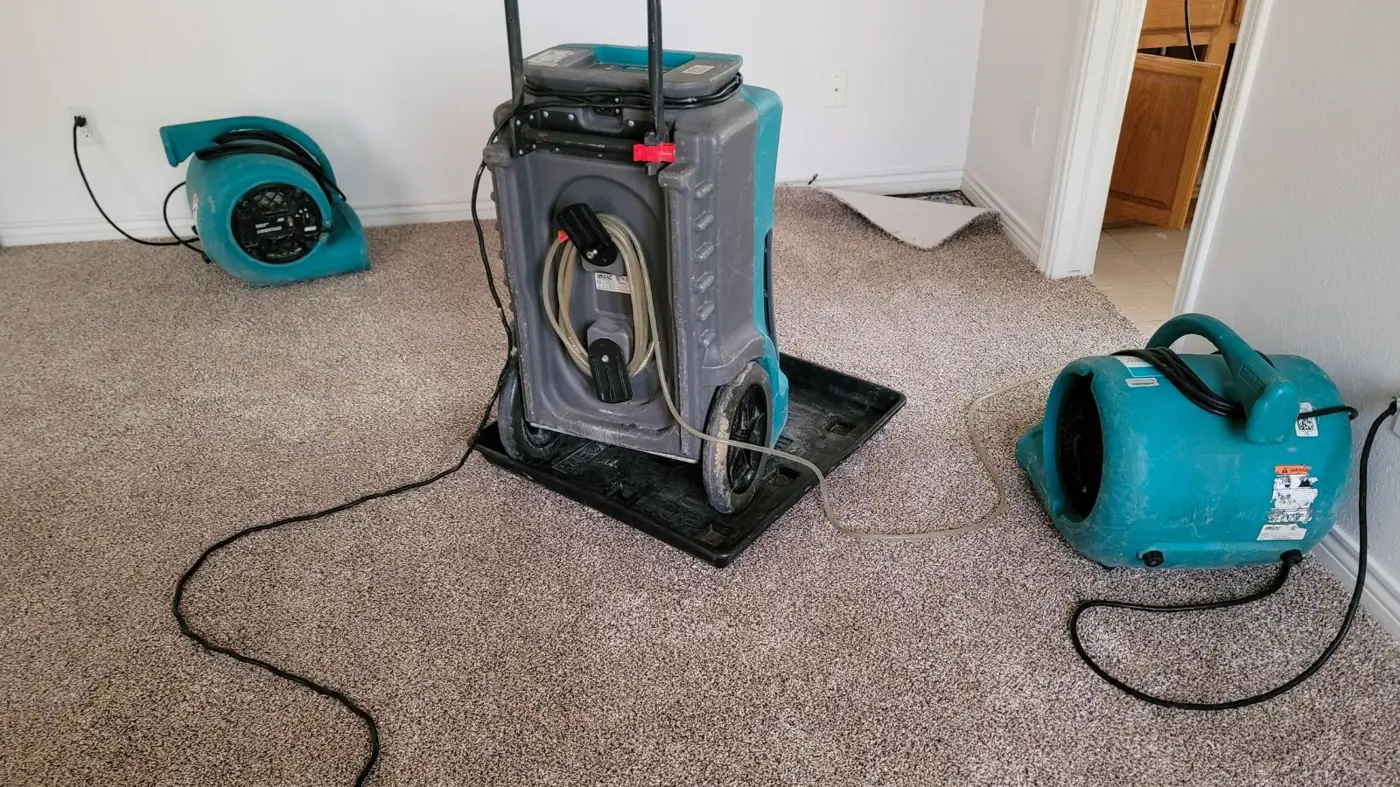
Air movers and dehumidifiers go in, and daily readings decide when each piece comes out.
Water class and category: what gets done
Crews sort water damage by category (how dirty the water is) and class (how much of the structure has absorbed it). The ANSI/IICRC S500 standard defines both, and you can ask any company whether its crews work to it.
| Situation | Category and class | What mitigation does |
|---|---|---|
| Supply line leak, one room, tile or vinyl floor | Category 1, Class 1 or 2 | Extract, dry the wall base and subfloor edge with air movers, check readings daily. |
| Ceiling leak from a unit above | Category 1 or 2, Class 3 | Open the ceiling if it is saturated, dry the cavity, track the wall below it. |
| Water into hardwood, plaster or a slab-on-grade floor | Class 4 | Longer drying with desiccant dehumidifiers and floor mat systems, with readings until the material dries. |
| Sewage or storm water inside the home | Category 3 | Stay out until trained crews arrive. Contaminated porous materials are removed, then the area is cleaned and sanitized. |
Categories and classes can change. Water that sits too long can move from Category 1 to Category 2, which is one reason mitigation is urgent.
Structural Drying
Structural drying is the slow middle of mitigation, after the water is out and before any rebuild. Air movers push dry air across wet floors and wall cavities so moisture leaves the surface faster. LGR dehumidifiers (low grain refrigerant units) pull that moisture out of the air and drain it away. Desiccant dehumidifiers do the same job with a drying wheel, which helps when the air is cool or the material is dense.
Moisture meters tell the crew what the eye cannot. Pin and pinless meters read drywall, framing and subfloor, and a thermal imaging camera shows cold, wet patches behind paint and under flooring. Each material gets a drying goal, set against a dry reference reading from an unaffected area of the same material. Readings are logged every day, so the numbers show whether the equipment is working.
Expect days, not hours. A small leak in drywall may dry in several days, while saturated hardwood, plaster or a wet subfloor under tile can run longer, and equipment comes out as the readings drop. The crew places, runs and removes the equipment. It is not offered as a rental, and running it without readings is guesswork.
Mitigate now, or wait and see?
A wet vacuum and a box fan can handle a small spill on a hard floor. They cannot dry the inside of a wall, and surface-dry floors can hide wet framing for days. The EPA advises drying water-damaged areas and items within 24 to 48 hours to prevent mold growth, which is a tight window for a house fan.
- Do it yourself: lowest upfront effort, but no moisture readings, and hidden wet material is easy to miss.
- Mitigation only: crews extract, dry and document, and you decide on repairs after the readings come back dry.
- Mitigation, then water damage repair: the usual path when drywall, flooring or cabinets must be replaced after drying.
What Affects The Price Of Water Mitigation
Mitigation pricing follows the scope the moisture readings reveal, not a flat rate. Five things move it most.
Water category
Clean water from a supply line is simpler than Category 2 or 3 water, which adds removal and sanitizing.
Area and class
More affected rooms and more absorbed material (Class 3 or 4) means more equipment and more setup.
Materials involved
Carpet over pad dries differently from hardwood, plaster or a wet subfloor, and some materials are cheaper to replace than dry.
Drying days and equipment
The number of air movers and dehumidifiers and the days they run depend on how fast daily readings fall.
Sudden and accidental water damage, such as a burst line, is often covered by homeowners policies, while gradual leaks and neglect often are not. Flood is usually excluded and needs separate flood coverage. Check your policy and ask your insurer, and keep the moisture logs and photos from the job for your claim.
Want your real number? Call (949) 670-0939 and the scope and price are explained before work starts.
Newport Beach Note: same dispatch line, every ZIP
Dispatch covers Newport Beach ZIP codes 92660, 92661, 92662 and 92663, and the same line also serves Costa Mesa. If you are unsure whether the leak is in your unit or the building's pipe, call first and let the moisture readings sort it out.
For the wider picture on how we handle jobs, see our Newport Beach team or the services overview.
Water Mitigation Questions
There is a wet spot on my wall and the baseboard is swelling. Is it too late?
Usually not, if the source is stopped. Swelling means water has been in the wall for a while, so call soon and have the cavity read with a moisture meter. Drywall that is still firm can often be dried in place, while soft or crumbling sections are cut out.
Do you take water mitigation emergency calls at night or on weekends in Newport Beach?
Yes. Dispatch is 24/7 and a same-day response is available when crews are free. No arrival time is promised on the phone, but you will be told what to do while you wait, including where to shut off the water.
How long does drying take, and what is the equipment doing?
Drying takes days, not hours, and the number depends on the material. Air movers push air over wet surfaces, LGR and desiccant dehumidifiers pull the moisture out of the air, and moisture meters are read daily to show when each material reaches its dry goal.
What does an inspection visit cover?
A walkthrough, moisture readings, thermal imaging where needed, and a written scope. Scope and price are explained before work starts, and photos and moisture logs support an insurance claim.
Will my insurance pay for water mitigation?
It depends on the cause. Sudden and accidental damage is often covered and gradual leaks often are not. Check your policy and ask your insurer, and we provide documentation but do not promise approval.