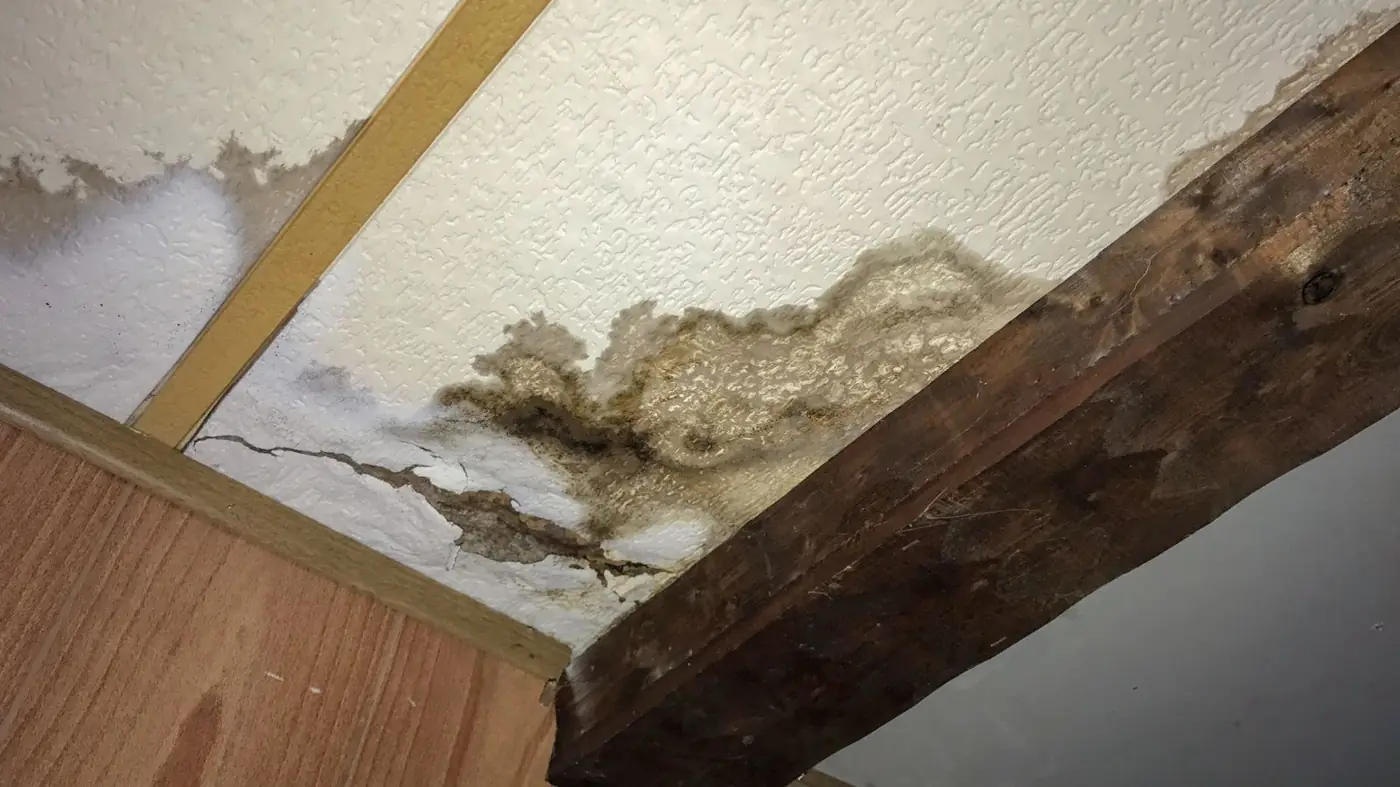
When rain is coming through the ceiling
Water dripping through a ceiling during a storm is an emergency, and the dispatch line is open 24/7 for it. Set a bucket under each drip, move furniture and electronics out of the way, and keep everyone away from any ceiling that bulges or sags. If water is running into a light fixture, switch off that circuit only when the panel is dry and safe to reach.
Roof leak water damage is the wet insulation, stained or softened ceiling drywall, damp framing and ruined finishes that rain causes after it gets past the roofing. Roofers fix the roof. We dry what got wet. A same-day response is available when crews are free.
Ceiling wet? Call before it spreads
Nights and weekends included. Scope and price are explained before work starts.
How roof leaks start and why winter rain finds them
Water seldom comes through the middle of a shingle or tile. It gets in where the roof is interrupted: flashing around chimneys and vents, skylight curbs, valleys, cracked sealant, and clogged gutters that push water back under the edge. Those are the weak points.
The city's storm flooding page says most years bring only light winter rain, with intense sustained rain every few years. A roof can pass several mild years without a real test, then meet a long hard storm and show every weak spot at once. A leak that first appears in a heavy spell deserves a roofer's inspection before the next one.
Age matters too. The city's Housing Element reports that most of the local housing stock predates 1980 and adds that homes past the 30-year mark typically need some major rehabilitation. For a roof, that argues for having flashing, sealant and penetrations looked at before the wet season. It does not mean yours is failing.
What you see on the ceiling and what it means
A ceiling shows only the end of the water's path. The entry point is often several feet away.
Brown or yellow ring
Water soaked through the drywall and dried at the edges. Rings that grow after each rain mean the leak above is still active.
Bubbling or peeling paint
Moisture is trapped behind the paint film, usually with wet drywall paper underneath.
Drip at a light or fan
Water is following wiring or ducts through the ceiling cavity. Treat that circuit as unsafe until it is checked.
Wet or flattened attic insulation
Insulation holds water against the framing and the back of the ceiling long after the rain stops.
Musty smell, no visible stain
Moisture is sitting in the attic or a wall cavity. Moisture meters and a thermal imaging camera find it without opening every surface.
Roof leak safety: the first hour
Stay off a wet roof. Tarping and patching belong to a roofer with proper fall protection, and a slick roof in a storm is a poor place to improvise.
Inside, lay a towel or plastic sheet under each bucket. If a ceiling holds a bulge of water, stay out from beneath it and keep children and pets away, because wet drywall can give way with no warning. When water is near a fixture, outlet or the panel and you cannot reach the panel on dry ground, stay back and call the electric utility or 911 before the restoration line.
What to do while you wait
The aim is to limit what gets wet and to keep a clear record.
Clear the floor below
Pull furniture, electronics and rugs out from under the stain. Leave heavy items alone if the floor is wet.
Catch and divert
Buckets, towels and plastic sheeting slow the spread across the room.
Photograph the damage
Take dated photos of the stain, the drips and any attic view you can reach safely.
Call a roofer
Ask for a temporary cover or repair. A room that keeps getting rewet cannot finish drying.
Open the way to the attic
Clear the hatch or closet so crews can check insulation and framing.
Roofer for the roof, restoration crew for the water
You usually need both, and the order matters. Stopping the entry first keeps the next rain from undoing the drying.
| Job | Who handles it | Why it matters |
|---|---|---|
| Flashing, shingles, tile and skylight seals | Roofer | Finding and closing the entry point stops the loss from continuing. |
| Temporary tarp or cover | Roofer | Keeps more rain out while permanent repairs are arranged. |
| Wet attic insulation | Restoration crew | Insulation that stays wet keeps feeding moisture into the ceiling below. |
| Soft or stained ceiling drywall | Restoration crew | Removal and drying decide whether the ceiling can be saved, as covered in water damage repair. |
| Damp framing and wall cavities | Restoration crew | Readings show whether water traveled down a wall past the stain. |
| Records for a claim | Both, in their own scope | A roofer's notes on the entry point and our moisture logs describe different halves of one loss. |
Share what each company finds. The roofer's entry point helps trace the water, and the moisture map helps the roofer see how far it went.
How a roof leak is dried from the attic down
A visit covers a walkthrough, moisture readings and a written scope, with photos, moisture logs and scope notes to document the loss for an insurance claim. Ask any company whether its crews work to the ANSI/IICRC S500 standard for water damage restoration.
Trace the path
Moisture meters and a thermal imaging camera follow the water from the stain back through the ceiling and into the attic.
Remove what holds water
Wet insulation and any ceiling drywall that is soft or sagging are cut out and bagged.
Open and dry
Air movers and LGR dehumidifiers pull moisture out of the framing and the remaining drywall.
Verify with readings
Daily moisture readings confirm the structure is dry before anything is closed up or replaced.
Mistakes to avoid after a roof leak
The cheapest moment to act on a roof leak is the first day. Most of the damage that follows comes from a few common errors.
- Painting over the stain: a damp stain hides the real problem, and the EPA says not to paint or caulk over mold.
- Climbing up in the rain: a wet roof is a fall risk, so leave it to a roofer.
- Waiting for the roof repair before drying: the EPA advises drying water-damaged areas and items within 24 to 48 hours to prevent mold growth, and wet insulation in a closed attic stays wet.
- Throwing out proof: photograph damaged materials before they are discarded.
- Assuming it is over once the dripping stops: water can still be sitting in the insulation and framing.
To prevent a repeat, ask a roofer to check flashing, sealant, skylights and gutters before the wet season, and keep the gutters clean. The EPA also puts indoor humidity at under 60 percent, ideally 30 to 50 percent, as the range that limits mold. If a leak has already left mold behind, mold remediation is a separate job.
What Affects The Price Of Roof Leak Water Damage Work
The price follows how far the water traveled below the roofline, not the size of the hole it came through.
How much is wet
A single ceiling patch is a different scope from an attic, two ceilings and a wall.
Insulation and ceiling materials
Removal effort differs between loose insulation, batts and textured or plain drywall.
Drying days and equipment
Air movers and LGR dehumidifiers run for as many days as the daily readings call for.
Access
A tight attic or a high ceiling takes more time and care than an open room.
Rebuild scope
New drywall, texture and paint are separate from the drying scope, and roof repair is separate again.
Sudden and accidental water damage is often covered, and a storm-driven leak may fall into that group. A leak from long-neglected roof wear often does not. A policy may treat the roof repair and the interior damage differently, so read yours and ask your insurer. The California Department of Insurance notes that standard homeowners insurance does not cover flood, which is a different event from rain entering through a roof.
Want your real number? Call (949) 670-0939 and the scope and price are explained before work starts.
Newport Beach Note: low streets, terraces and hills
The city's storm flooding page sorts Newport Beach into low-elevation areas such as West Newport and the Balboa Peninsula, the elevated terrace of Newport Heights and Westcliff, and the steep terrain of the San Joaquin Hills, Newport Ridge and Newport Coast. Rain reaches every roof, so that map does not decide whether yours leaks. It does tell you whether to also check for ground-level water, which belongs under storm water damage or flood damage restoration.
Dispatch also serves nearby Laguna Beach and Huntington Beach.
Roof Leak Water Damage Questions
Is emergency roof leak water damage available in Newport Beach?
Yes. Dispatch is open day and night, and a same-day response is available when crews are free. No arrival time is promised. The dispatcher tells you what to do while you wait, starting with buckets and keeping clear of any sagging ceiling.
Do you repair the roof itself?
No. Dispatch sends licensed and insured restoration professionals for the water side: extraction, removal of wet materials and drying. A roofer handles tarping, flashing and roof repair.
Should I make a hole to drain a bulging ceiling?
Stay out from under it and call. Wet drywall can drop without warning, and a crew can open it in a controlled way with extraction equipment and the floor protected.
Can a roof leak lead to mold?
Mold needs moisture, and wet insulation and framing can hold it for a long time. The EPA advises drying within 24 to 48 hours. Questions about health effects belong to a physician.
Will insurance cover a roof leak?
That depends on your policy and on whether the damage was sudden or gradual. Ask your insurer about both the roof repair and the interior damage, and keep the photos and moisture logs from the visit.