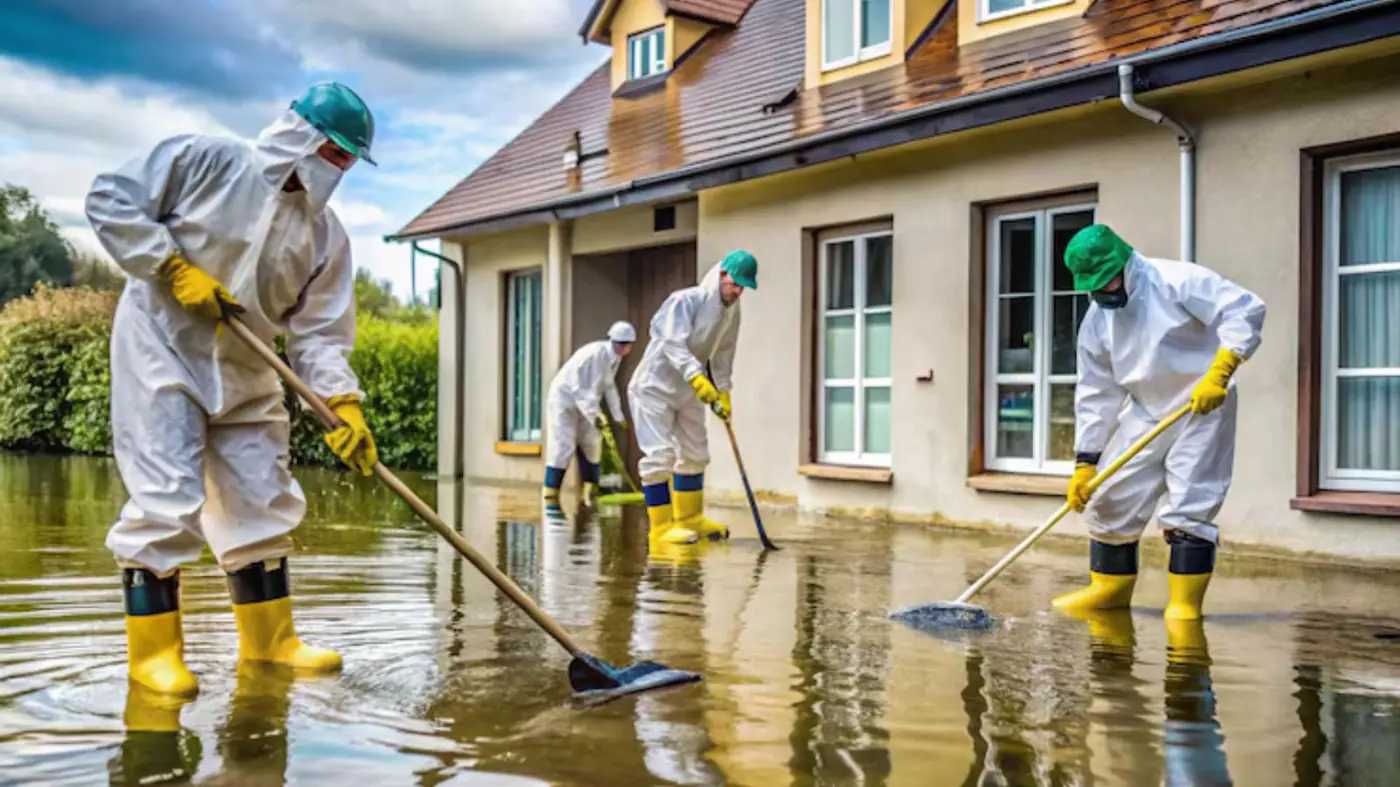
When cleanup can't wait for the weekend
The water has stopped, but what it left behind has not gone away. Wet carpet, soaked drywall, debris and a sour smell all get worse by the hour. Call (949) 670-0939 for 24/7 dispatch and a same-day response when crews are free.
Water damage cleanup is the removal of water-soaked debris and contaminated materials, followed by sanitizing and deodorizing the space so it can be dried and rebuilt. Until crews arrive, keep the main water valve closed, keep people and pets out of dirty water, lift valuables off wet floors, and turn off power to wet areas only if the panel is dry and safe to reach.
Mess still sitting there? Call now
Same-day response when available. Scope and price are explained before work starts.
Why storm water cleanup is treated as contaminated
A regional flood annex notes that portions of the city sit in both the 100-year and 500-year FEMA flood zones. The city's flood page adds that increased paving sends more runoff to storm drains, so areas that never flooded before can flood when the drains were not built for the higher flows. If storm water came through your door, assume it is Category 3 even if your street was dry last winter.
Check the city's flood zones map and the FEMA Flood Map Service Center for your address. The city lists low-lying West Newport, the Balboa Peninsula and Newport Bay, while Newport Heights and Westcliff sit on an elevated marine terrace. Either way, water that crossed the ground outside is not clean.
What the first 48 hours of cleanup involve
The EPA advises drying water-damaged areas and items within 24 to 48 hours to prevent mold growth. Cleanup is built around that window.
Debris and soaked materials out
Wet carpet pad, ruined drywall sections, trim and loose contents are bagged and removed so they stop holding moisture.
Surface cleaning
Hard surfaces are scrubbed with detergent and water and then dried, which is the EPA's basic method for non-porous materials.
Sanitizing
An antimicrobial is applied to surfaces that touched Category 2 or 3 water, such as framing, concrete and sealed floors.
Odor control
HEPA air scrubbers filter the air, and deodorizing treatments are used after the source of the smell has been removed.
Contents sorting
Furniture, boxes and clothing are sorted into clean, restorable and discard piles, with photos for your records.
How a cleanup job is carried out
A cleanup visit begins with a walkthrough, moisture readings and a written scope, and the photos and notes support an insurance claim. Scope and price are explained before work starts.
Identify the water category
Category 1, 2 or 3 decides what protective gear and disposal methods are used.
Remove debris and materials
Wet and contaminated items are cut out, bagged and carried out.
Clean and sanitize
Surfaces get detergent cleaning, then antimicrobial treatment where the water was dirty.
Deodorize and recheck
Air scrubbers run, moisture meters recheck the structure and drying equipment stays in place.
Save it or remove it? How common materials are judged
Whether a material is saved depends on the water category and how long it stayed wet. These are the usual calls, not rules for every house.
| Material | Usually save or remove | Why |
|---|---|---|
| Drywall | Remove if Category 2 or 3 or saturated, dry in place if clean and firm | Paper face and gypsum hold moisture and stain, and sewage cannot be washed out of them. |
| Carpet and pad | Pad usually removed, carpet saved if the water was clean | Pad acts like a sponge and is cheap to replace. Contaminated carpet is discarded. |
| Hardwood | Often dried if caught early, removed if cupped or buckled | Boards take on moisture from below, so mitigation and drying decides the outcome. |
| Insulation | Usually removed when wet | Wet batts lose their value and hold water against the framing. |
| Cabinets | Dried if solid wood and clean water, removed if particleboard swells | Particleboard breaks down when wet, and toe-kicks hide moisture. |
| Upholstery | Cleaned if clean water, discarded if contaminated | Foam and fabric absorb dirty water that cannot be fully cleaned out. |
Porous items such as ceiling tile and carpet may need to be thrown away. Final calls are made with moisture readings.
Sewage and storm water are not a do-it-yourself job
The EPA says to call a professional for sewage or other contaminated water. Wear gloves, an N-95 respirator and goggles without ventilation holes if you must be in the space for any reason, and do not routinely use bleach or other biocides. Do not paint or caulk over mold if you find it.
Crews working Category 3 jobs set up containment barriers, run HEPA air scrubbers and dispose of contaminated materials separately. After the area is cleaned, drying continues, and if mold shows up later the next step is mold remediation, which follows the ANSI/IICRC S520 standard. Health questions about exposure belong to a physician.
Clean it yourself, or bring in a crew?
A homeowner can usually handle a small clean-water spill on a hard floor with a mop and a fan. The picture changes with dirty water, wet insulation, soaked pad or anything behind a wall.
- Do it yourself: works for a small clean-water spill, but no readings and no disposal of contaminated material.
- Cleanup crew: removes debris, sanitizes and deodorizes with proper protective gear and documents what was done.
- Crew plus emergency water removal: the right call when standing water is still in the house.
If a rebuild follows, ask the city Building Division whether your repair needs a permit, and check the contractor's license on the state licensing board's lookup.
What Affects The Price Of Water Damage Cleanup
Cleanup is priced on what has to come out and how it has to be handled, not on a flat rate.
Water category
Category 3 jobs need protective gear, containment and contaminated-waste disposal.
Affected area
More rooms and levels mean more debris, more hauling and more surfaces to clean.
Materials removed
Drywall, insulation, pad and cabinets each have a different removal effort.
Odor and sanitizing needs
Heavy odor may need air scrubbers and repeat treatments.
Rebuild scope
What gets replaced afterward is a separate scope from cleanup.
Standard homeowners insurance does not cover flood damage, which usually needs a separate policy such as the federal National Flood Insurance Program, and an NFIP policy generally takes effect 30 days after purchase. Sudden and accidental water damage is often covered, while gradual leaks often are not. Check your policy and ask your insurer, and the California Department of Insurance consumer line is 1-800-927-4357 if you have a dispute.
Want your real number? Call (949) 670-0939 and the scope and price are explained before work starts.
Newport Beach Note: apartments and condos
About 34.5 percent of the city's homes are in multi-unit buildings, and 67.9 percent of renters live in them. Water in one unit often reaches the next, so tell your building manager or HOA before cleanup starts and photograph everything first.
Dispatch covers Newport Beach ZIP codes 92660, 92661, 92662 and 92663. The same line also serves Irvine, and the main page covers water damage restoration in Newport Beach as a whole.
Water Damage Cleanup Questions
Do you take water damage cleanup emergency calls at night or on weekends in Newport Beach?
Yes. Dispatch is 24/7 and a same-day response is available when crews are free. No arrival time is promised, and the dispatcher explains what to do while you wait.
What is the difference between water removal and water damage cleanup?
Removal pumps out standing water. Cleanup deals with what the water left: debris, soaked materials, contamination and odor.
How soon should cleanup start?
As soon as the water is stopped. The EPA advises drying water-damaged areas and items within 24 to 48 hours to prevent mold growth.
Can my carpet be saved?
If the water was clean and caught early, often yes, though the pad is usually replaced. If the water was sewage or storm water, carpet is usually discarded.
Is sewage cleanup safe to do myself?
No. The EPA says to call a professional for sewage. Stay out and call the utility or 911 if there is a gas or electrical risk.
What does an inspection visit cover?
A walkthrough, moisture readings and a written scope. Scope and price are explained before work starts, and photos and moisture logs support an insurance claim.