Drying is a job with a clock, and the clock is already running
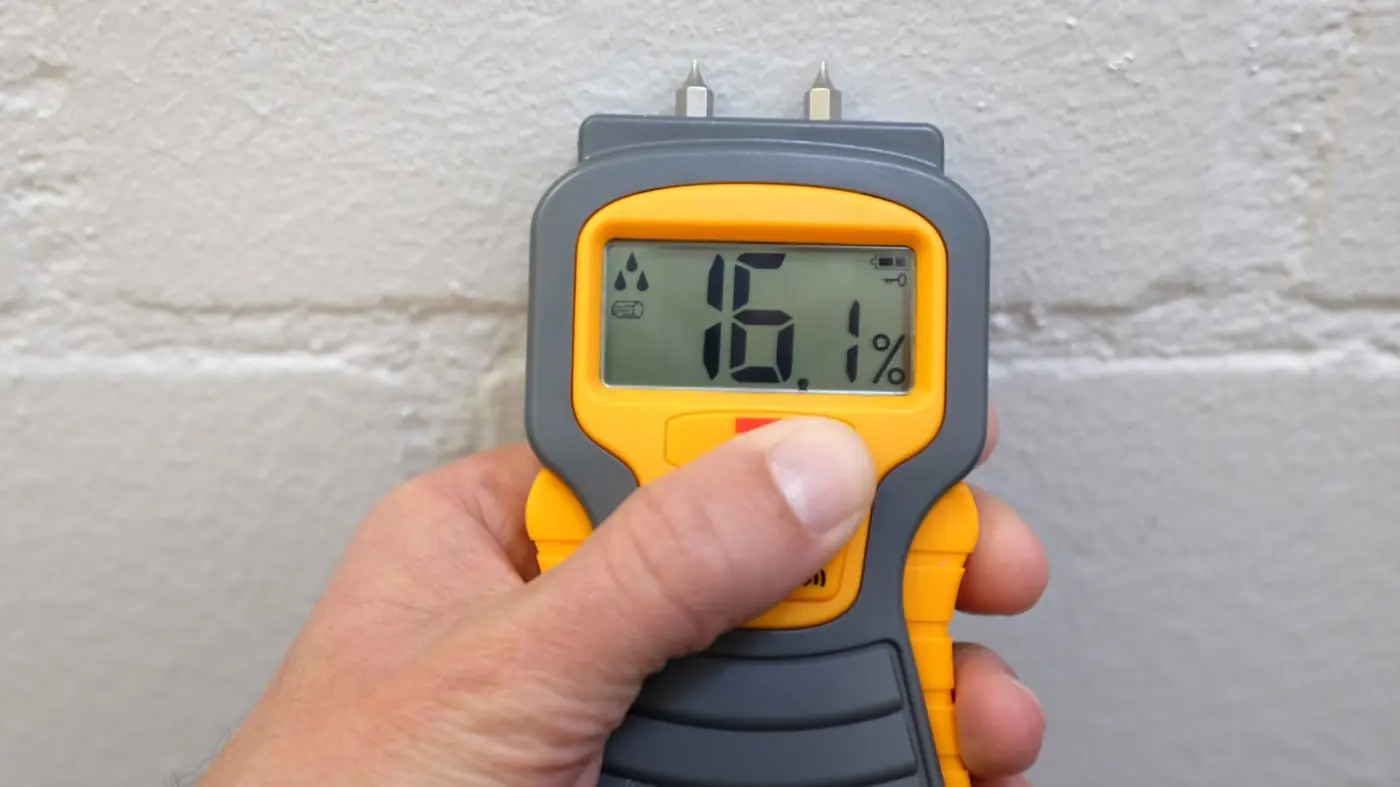
Structural drying means removing absorbed moisture from the building itself: studs, plates, subfloor, drywall, plaster and insulation. It uses air movers to sweep water off surfaces and dehumidifiers to take that water out of the air, with meters tracking the result every day.
The urgency is real, though it is slower than a burst pipe. The EPA advises drying water-damaged areas within 24 to 48 hours to head off mold growth. If the water is out and the house still feels damp, call (949) 670-0939. Dispatch runs 24/7, with same-day response when available.
Damp walls days after cleanup?
Call for a moisture walkthrough. Scope and price are explained before any equipment is set.
The carpet is dry but the wall still feels cool. Is it dry?
Probably not. A wall that feels cool, a baseboard that will not stop swelling, or a smell that returns every evening usually means water is sitting inside the cavity or under the floor. A towel and a fan only dry what you can touch.
That gap has a trade name: structural drying. It starts from a moisture map instead of a guess, and it ends when the readings match a dry reference, not when the surface looks fine.
Class 1 to 4: how much of the building absorbed the water
ANSI/IICRC S500, the published water damage restoration standard, sorts jobs into four classes by how much water the materials took on. The class sets how much equipment goes in and how long it runs.
Class 1
Little absorption. A small area, low-porosity materials such as tile, and not much wet drywall.
Class 2
A whole room of carpet and pad is wet, and water has wicked up the walls. More surface, so more air movers and dehumidifier capacity.
Class 3
Water came from above. Ceilings, insulation, walls and floors are all saturated. The most evaporation, so the most demand on the dehumidifiers.
Class 4
Dense, slow materials such as hardwood, plaster and concrete. Moisture comes out slowly, so hardwood floors and slabs call for specialty drying and patience.
Why the air matters as much as the fan
Water leaves a wet material by evaporating into the air around it. Air can only hold so much vapor, and warm air holds more than cool air. Once the room air is full, evaporation slows, no matter how many fans run.
That is why a dehumidifier does the real work. Drying crews measure the vapor in the air in grains of moisture per pound of dry air, then compare the room against an unaffected space. A big gap means the materials can keep releasing water. A small gap means drying has stalled.
Air movers set the second half of the equation. They keep a thin layer of saturated air from sitting on the wall or floor, so the surface keeps giving up moisture to the room.
How a drying job is set up and run
Equipment goes in only after the water is extracted and the moisture has been mapped. Then the room is closed up so the dehumidifier is working on one space instead of the whole house.
Close the drying zone
Doors and windows stay shut, and the zone is separated from dry rooms so the dehumidifiers are not pulling in outside air.
Place the air movers
Units are angled along wet walls and across floors, then moved or added as the readings change.
Run the dehumidifiers
LGR or desiccant units are sized to the class and cubic feet of the zone, with condensate drained out and not left to spill.
Read and adjust daily
Moisture meters and a thermal imaging camera are used each visit, and equipment is moved, added or pulled to match the numbers.
Which tool does what during drying
Each piece has a job. The mix depends on the material, the class of water damage, and how cool or warm the space is.
| Equipment | What it does | When it fits |
|---|---|---|
| Air mover | Pushes air across surfaces to lift moisture off walls and floors | Nearly every job, repositioned as the readings change |
| LGR dehumidifier | Condenses water out of the air with a refrigerant coil, low grain refrigerant design | Warm rooms, general structural drying |
| Desiccant dehumidifier | Uses a drying wheel to adsorb moisture, which works in cool, dense or low-humidity conditions | Cool spaces, plaster, and slow-drying material |
| Floor drying mats | Draw moisture from boards through suction while the surface stays in place | Wet hardwood that may be saved |
| Moisture meter and thermal camera | Show wet spots, track daily progress, confirm the dry standard | Every visit, start to finish |
Equipment is placed, run and removed by the crew. Running it without readings is guesswork.
Safety first: what to do before and during drying
If water is still coming in, stop that first. Close the main water valve, and read the water mitigation steps for the first 72 hours. Turn off power to wet areas only if the panel is dry and you can reach it without stepping in water. If you smell gas, see sparking or have sewage backing up, leave and call the utility or 911 before the restoration line.
Once equipment is running, leave it on. Cords are kept off wet floors and run to separate outlets, because a dehumidifier and several air movers add real electrical load. Keep children and pets out of the zone, and do not unplug a unit to run a vacuum.
How a drying crew knows the structure is dry
Each material gets a drying goal, measured against a dry reference reading taken from an unaffected area of the same material. When framing, subfloor and drywall read at or near that reference for the day, equipment comes out.
A clock does not decide that. Every visit adds a line to the moisture log, and the log, together with photos and scope notes, is also the documentation an insurance claim needs.
Air matters too. The EPA says to keep indoor relative humidity below 60 percent, ideally 30 to 50 percent, so a house that sits at 70 percent after equipment leaves is not finished.
Dry in place, open it up, or replace
Drywall that is still firm, framing and most subfloor can usually dry in place. Soft, crumbling or contaminated material is cut out, which is also faster than waiting for it to fail.
Hardwood sits in between. Boards can often be dried with mats if the water was clean and caught early, while carpet and pad is a separate decision based on water category and time.
- Dry in place: least demolition, but every cavity needs readings.
- Open and dry: a flood cut or pulled baseboard lets air reach wet insulation and the bottom of the wall.
- Remove and rebuild: for Category 3 water or material that will not dry, followed by water damage repair.
Mistakes that stall drying
The most common one is stopping at the surface. Paint, flooring and trim go back on a wall that still reads wet, and the moisture has nowhere to go. Paint over a damp wall only seals the moisture in.
Opening windows while dehumidifiers run is another, because outside air adds moisture the machines then have to remove. So is taking equipment out the day the floor feels dry, and so is turning it off at night because of noise.
Skipping the dry reference also costs you. Without a number from an unaffected wall, nobody can say when drying is finished.
What Affects The Price Of Structural Drying
Drying is billed from the scope the readings produce, not from a flat rate. These factors move it most.
Class and material
Class 3 and Class 4 jobs involve more absorbed material, and dense hardwood or plaster takes longer than drywall.
Affected area
More rooms and more cubic feet need more air movers and larger dehumidifier capacity.
Water category
Clean water can dry in place, while Category 2 or 3 water often adds removal and sanitizing before drying.
Days of equipment
Daily readings decide how long each unit runs. A job that dries slowly costs more drying days.
Rebuild scope
Materials that dry in place avoid replacement. Materials that do not are priced in the repair that follows.
Sudden and accidental water damage, such as a burst line, is often covered by homeowners policies, while gradual leaks and neglect often are not. Flood is usually excluded and needs separate flood coverage. Check your policy and ask your insurer, and keep the moisture logs and photos.
Want your real number? Call (949) 670-0939 and the scope and price are explained before work starts.
Newport Beach Note: older homes and flood-zone addresses
The city's Housing Element says most local housing was built before 1980, and that housing over 30 years old typically needs some major rehabilitation. Older homes often have layered flooring, plaster and old insulation, so ask for readings in more than one material.
A regional hazard-mitigation annex says significant parts of the city lie in both the 100-year and 500-year FEMA flood zones. If floodwater rather than a pipe soaked your home, treat it as contaminated and see flood damage restoration. For a leak in the neighboring city, the same line serves Costa Mesa and Huntington Beach. More on our Newport Beach team is on the homepage.
Structural Drying Questions
Is emergency structural drying available in Newport Beach?
Dispatch runs 24/7 and a same-day response is available when crews are free. No arrival time is promised on the phone. The urgent part is the first day or two, since drying inside the EPA's 24 to 48 hour window helps prevent mold growth.
How many days will the equipment run?
It depends on the class and the material. Small drywall jobs may take several days, while saturated hardwood, plaster or a wet subfloor can take longer. The daily moisture readings decide, not a calendar.
Why are the dehumidifiers so loud and warm?
They work by condensing or adsorbing water from the air, and the process gives off heat, so the room often warms. The warmth helps evaporation, so the machines stay on.
Can I just rent fans and a dehumidifier from a store?
You can, but placement and sizing matter and a rental does not come with meters. Without readings from the wall cavity and subfloor, a surface can seem dry while framing stays wet.
What does a drying visit cover?
A walkthrough, moisture readings, thermal imaging where needed, and a written scope. Scope and price are explained before work starts.
Will my insurance pay for drying?
It depends on the cause. Sudden and accidental damage is often covered, and gradual leaks often are not. Check your policy and ask your insurer. Photos and moisture logs support a claim, but approval is never promised.