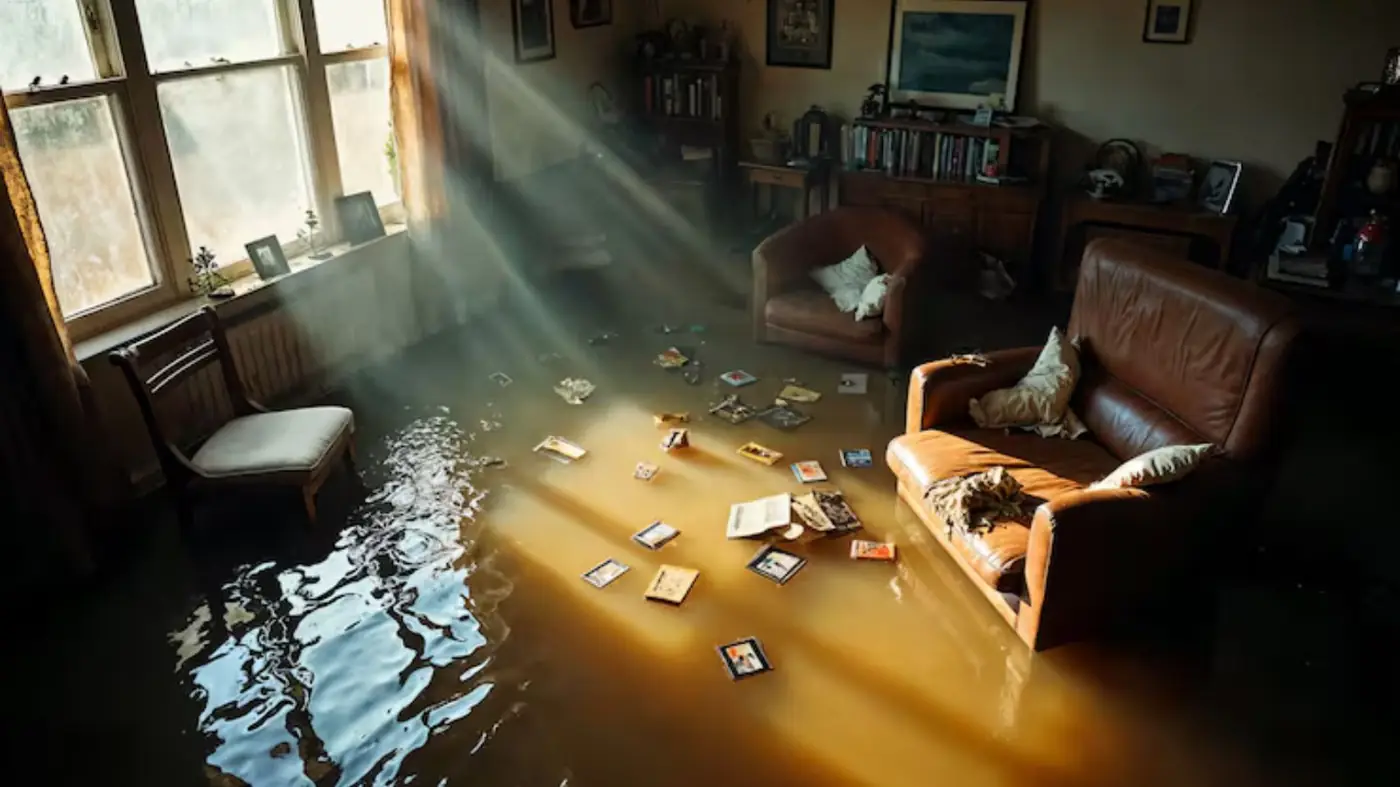
When Floodwater Is An Emergency In Your Home
Floodwater inside a house is an emergency, and every hour it sits raises the loss. Flood damage restoration is the work of extracting that water, removing what it ruined and drying the structure. Our dispatch line runs 24/7.
While you wait, keep people and pets out of the water, because it may carry sewage. Lift valuables off the floor. If a pipe is feeding the flood, shut off the main water valve. Turn off power to wet areas only if the panel is dry and safe to reach.
If you see sparks, smell gas or have sewage rising through drains, stay out and call 911 or the utility first. Then call us.
Water still coming in?
Call (949) 670-0939 any hour. Same-day response when available, with the scope and price explained before work starts.
Where Newport Beach Floods First
The city's own storm flooding page names the low-elevation areas: West Newport, the Balboa Peninsula and the Newport Bay edge. Homes there sit close to both tide and runoff, so check your exposure to each.
The same page lists past flood years: 1969, 1978, 1980, 1983, 1992, 1995, 1998 and 2005. Most years bring light winter rain, but every few years brings intense, sustained rain. The practical takeaway is to look up your address on the city's flood zones map and the FEMA Flood Map Service Center before the next storm, not during it.
King Tides On The Peninsula And Balboa Island
The city has advised residents that evening high tides may cause localized flooding in low-lying harborfront areas, including the Peninsula, Balboa Island, Balboa Village, Newport Island, Finley Tract and Lido Village. The regional hazard-mitigation annex adds that rising ocean levels are causing flooding more often on Balboa Island and the Balboa Peninsula.
If you own harborfront property, the city suggests seawall plugs and sandbags in vulnerable spots. Prefilled sandbags are at the City Corporation Yard on Superior Avenue, and unfilled bags are at fire stations. Crews install gap boards on Balboa Island, so drive slowly through flooded streets, since wakes push water into property.
How Floodwater Gets Into A House
Where the water came from decides how it is classed and how it is cleaned.
Storm runoff
Rain that outruns the storm drains pools in streets, garages and low doors. San Diego Creek is the main tributary to Newport Bay, and more paving sends more runoff down to it.
Tidal flooding
Saltwater and bay water enter through seawalls, doors and low drains. It carries silt and is treated as contaminated.
Groundwater
Saturated soil pushes water up through slab cracks, floor drains and crawl space vents. It often arrives slowly and goes unnoticed for hours.
Mudflow from hillsides
The city notes mudflow risk where development sits at the base of mountains and below canyons. Mud packs wall cavities and needs removal, not just pumping.
Sewer and drain backup
Storm flows can overload lines and push waste back up. This is Category 3 water and has its own safety rules, covered below.
Terraces, Hillsides And Steep Streams
Not every Newport Beach flood is low and coastal. Newport Heights and Westcliff sit on an elevated marine terrace, while Newport Ridge and Newport Coast have steep natural streams in the San Joaquin Hills. Runoff there moves fast and carries soil and debris.
For homes on slopes, the first question is where the water is going, not just where it landed. Check that downspouts and drains are clear before a storm, and expect mud inside garages and lower levels that open to a hillside.
From Standing Water To A Dry Structure
Flood work follows a fixed order, and the order is driven by the water category.
Safety and category check
The crew confirms power and gas are safe, then classes the water as Category 2 or 3 before touching anything.
Extract and remove
Truck-mounted and portable extraction units pull standing water, then soaked carpet, pad, drywall and insulation that cannot be saved are cut out.
Clean and sanitize
Hard surfaces and framing are cleaned and treated with antimicrobial products suited to contaminated water.
Dry and verify
Air movers, LGR dehumidifiers and moisture meters bring the structure down to dry readings. Thermal imaging cameras look for hidden wet spots.
What Gets Saved And What Goes After A Flood
Floodwater is almost never Category 1. The class of water changes the answer for each material.
| Material | Category 2 (gray water) | Category 3 (black water) |
|---|---|---|
| Carpet and pad | Pad usually removed, carpet sometimes cleaned and dried | Both removed |
| Drywall and insulation | Wet insulation removed, drywall cut above the wet line | Cut out, often well above the wet line |
| Solid wood furniture | Often cleaned and dried | Case by case, upholstery usually discarded |
| Concrete and tile | Cleaned and dried | Cleaned, sanitized and dried |
| Hardwood flooring | Sometimes dried in place | Usually removed |
Porous materials hold contamination. The written scope lists each item so you see why it stays or goes.
Basement Flooding Cleanup
Basements are not found in every coastal home, so this section speaks to homes that have them: basements, lower levels, garages and crawl spaces. Water collects at the lowest point and stays there until it is pumped.
Basement flooding cleanup begins with extraction. Submersible pumps and extraction units pull the water, then the crew checks walls, stored items and framing with a moisture meter. Carpet, pad and the bottom section of drywall usually come out, because wet insulation cannot dry in a closed cavity.
Garages are the lower level many homes do have, and they flood through the door and the drain. Stored boxes, cardboard and drywall along the bottom of the wall wick water upward, so move them to dry ground early. Photograph everything before it is moved or discarded, because those photos support an insurance claim.
Lower levels also trap humidity, which is why drying equipment runs for days after the water is gone. Hold off on rebuilding until readings are dry. If any growth shows up, mold remediation comes before new drywall goes up.
Sewage Backup Cleanup
Sewage is Category 3 water. Stay out of it. Keep children and pets away, do not run drains, and do not try to clean it yourself. If there is any electrical or gas risk, call 911 or the utility before you call the restoration line.
If the sewer main in the street seems to be the source, call the city water and sewer emergency line at (949) 644-3011. After hours the city lists the Police Department line, (949) 644-3717. That tells you whether the blockage is yours or the city's.
Sewage can also come back after a first cleanup if the line is not cleared, so a plumber should confirm the blockage is gone before crews finish. Keep the contaminated area closed off, and do not walk through it to reach other rooms. HEPA air scrubbers and containment barriers help keep the affected zone separate while work goes on.
Porous materials touched by sewage, such as carpet, pad, drywall and insulation, are usually removed. Hard surfaces are cleaned, then sanitized with products suited to the job, and the area is dried and checked with a moisture meter. Ask any company whether its crews work to the ANSI/IICRC S500 standard.
Crawl Spaces And Whole-House Flooding
A crawl space floods out of sight. Water sits against the subfloor and joists, and insulation under the house can hold it for days. Crews pump the space, remove wet insulation and set air movers and dehumidifiers to dry the framing.
When water covers an entire floor or more, the job is a whole-house flood: extraction in every room, a full tear-out of affected materials and long drying days. For the drying stage, see water mitigation.
What Affects The Price Of Flood Damage Restoration
Flood jobs vary more than almost any other loss. These factors set the scope.
Water category
Category 3 water needs more removal, protective gear and sanitizing than Category 2.
Affected area
One garage and a whole floor are very different volumes of water and materials.
Materials
Carpet and pad are quick to remove. Plaster, tile and cabinets take more labor.
Drying days and equipment
Air movers and dehumidifiers run for days. More rooms and thicker materials mean more units and more time.
Rebuild scope
Restoration ends when the structure is dry. Replacing drywall, flooring and cabinets is priced separately.
Insurance works differently for floods. Standard homeowners insurance does not cover flood damage, and flood is usually excluded. Flood coverage is a separate policy, such as one through the federal National Flood Insurance Program, and an NFIP policy generally takes effect 30 days after purchase. Check your policy and ask your insurer about deadlines.
We document the loss with photos, moisture logs and scope notes for any claim you file.
Want your real number? Call (949) 670-0939 and the scope and price are explained before work starts.
Newport Beach Note: Before And After The Water
We serve Newport Beach ZIP codes 92660, 92661, 92662 and 92663. The city Building Division lists a Coastal Flood Recovery Program, FEMA flood maps and elevation certificates on its pages, so ask whether your repairs need a permit and what recovery help applies.
Neighbors in nearby Huntington Beach are covered on our Huntington Beach page, and day-to-day cleanup after the pumps stop is described under water damage cleanup.
Flood Damage Questions
Do you handle emergency flood damage at night or on weekends in Newport Beach?
Yes. Our dispatch line runs 24/7, including nights, weekends and holidays. We offer same-day response when available, and we do not promise an arrival time. Call (949) 670-0939 and the dispatcher explains what to expect.
Does homeowners insurance cover flood damage?
Standard homeowners insurance does not cover flood damage. Flood coverage is a separate policy, such as one through the National Flood Insurance Program. An NFIP policy generally takes effect 30 days after purchase. Check your policy and ask your insurer.
Is floodwater always Category 3?
Not always, but floodwater is rarely clean. Storm and groundwater floods are often Category 2 or 3, and tidal water and sewage are treated as contaminated. The category is set at the first assessment and drives which materials come out.
What do I do if sewage is backing up in my house?
Stay out of it, keep people and pets away and do not run drains. Call 911 or the utility for any electrical or gas risk. Then call us for removal and sanitizing.
Can a basement or crawl space be dried without tearing things out?
Sometimes. Clean Category 2 water caught early may allow some materials to dry in place. Category 3 water and long-soaked insulation usually mean removal.
How do I know if my address is in a flood zone?
Check the city's flood zones map and the FEMA Flood Map Service Center for your address. Significant portions of the city lie within both the 100-year and 500-year FEMA zones, according to the regional hazard-mitigation annex.