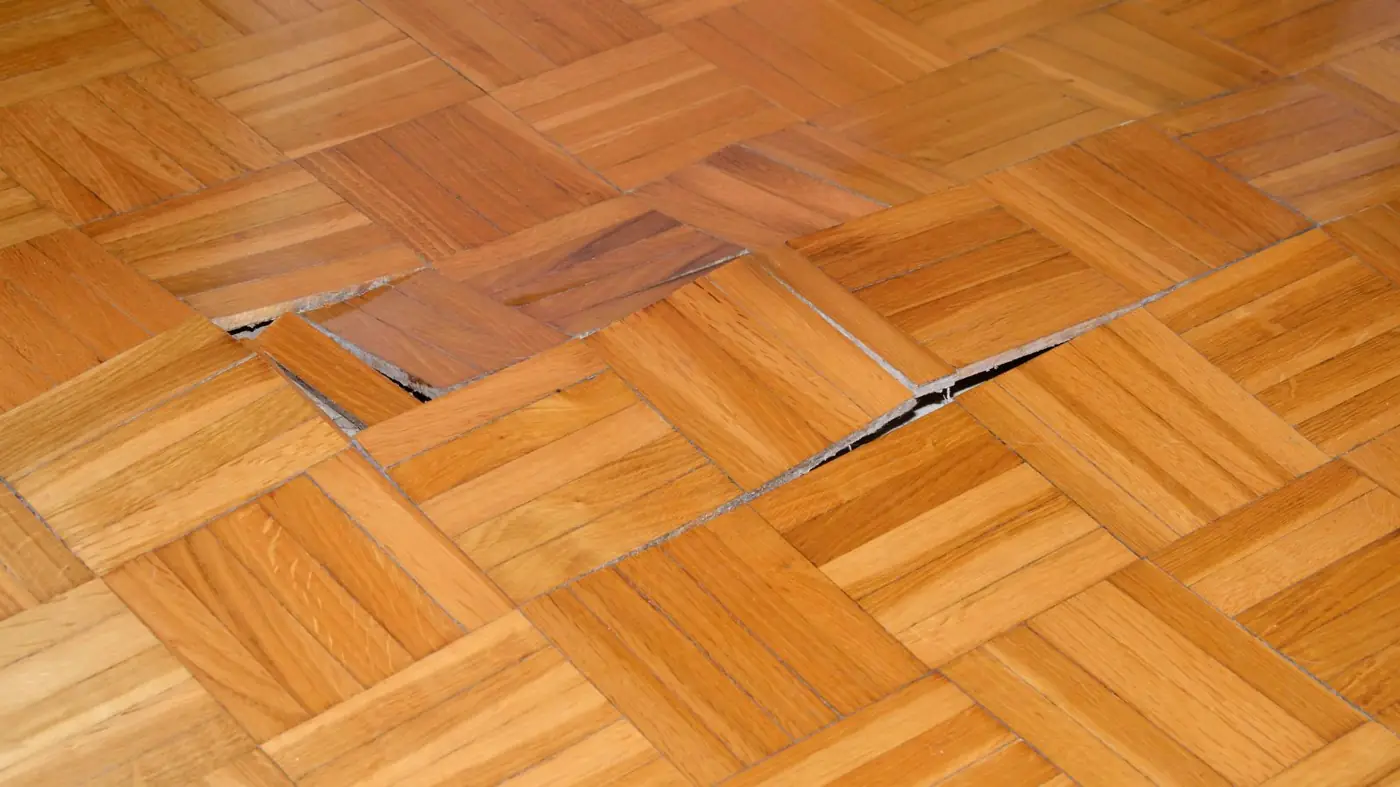
What Water Does To A Wood Floor
Hardwood floor water damage is the swelling, distortion and finish failure that follow when boards absorb liquid water or sustained humidity. Solid boards swell across their width. Engineered boards, built from layers of wood glued crosswise, can also come apart at the glue lines.
The repair is a sequence rather than a single job: stop the source, remove standing water, dry the boards and the subfloor to a measured target, and only then decide between sanding, refinishing and replacing. Skipping to the cosmetic step is the most common reason a floor has to be done twice.
Floor still wet underfoot?
Call (949) 670-0939. 24/7 dispatch, same-day response when available.
Signs A Wood Floor Has Taken On Water
The pattern of the damage points to where the water came from.
Cupping
Board edges ride higher than the middle, so the floor looks ribbed under raking light. Water usually arrived from below.
Crowning
The middle of each board stands higher than its edges. It often appears after a cupped floor is sanded before it finishes drying.
Buckling
Whole sections push up off the subfloor and sometimes tent in the middle of the room. This is the most severe stage and usually means replacement.
Gaps and checks
Open seams or hairline splits mean the wood shrank after swelling, or dried faster than it should have.
Dark or gray patches
Stains that follow the grain point to water that sat for days. They may sand out, or they may be deep enough that the board has to go.
Cloudy or white finish
Trapped moisture can turn a clear coat milky. The wood below may be fine.
Newport Beach Housing Age And What Is Under Your Boards
The city's Housing Element reports that about 20 percent of homes were built before 1960 and 41.3 percent between 1960 and 1979. Floors in homes from those decades may still be original solid boards, and thick solid wood can often take another sanding.
Engineered planks installed during a later remodel are different, since the top veneer is thin and may allow little or no sanding. Knowing which floor you have changes the repair, so tell the crew what you know about past work and any earlier water events.
Wet Floor Safety Checklist For The First Hour
Wet wood is slick, so walk carefully and keep children and pets off the floor. Stop the source at the shut-off valve, or the main water valve if you cannot find the local one. If water reached outlets, floor plugs or baseboard heaters, turn off that circuit only when the panel is dry and safe to reach.
Sewage or backed-up drain water changes everything. Stay out of it and call the city sewer line or 911 if there is any gas or electrical risk, then call the restoration line.
While you wait, lift rugs, pads and plant pots off the boards. Photograph the room first.
How A Wood Floor Is Dried Without Wrecking It
Wood does best when it dries slowly and evenly, so the setup is chosen for the floor, not the room.
Map and meter
A pin or pinless moisture meter reads boards and subfloor, and a thermal imaging camera finds water under the finish. Readings are logged against an unaffected board as the dry reference.
Extract the water
Extraction units and wet vacuums remove standing water from the surface and the seams, and wet underlayment is lifted.
Dry with mats and airflow
Floor drying mats pull moisture through the boards while air movers and an LGR dehumidifier control the room. The setup changes as readings drop.
Confirm and decide
When boards and subfloor match the reference, the floor is re-checked flat and the scope names what is sanded, refinished or replaced.
Solid, Engineered And Site-Finished Floors Compared
The right repair depends on what the board is made of.
| Floor type | How water affects it | Usual repair path |
|---|---|---|
| Solid strip or plank | Swells across the width, may cup then flatten as it dries | Dry, wait for stable readings, then sand and refinish if flat |
| Engineered click-lock | Layers can separate and edges swell | Damaged planks are lifted and replaced, since thin veneers rarely allow sanding |
| Engineered glued down | Water can loosen the bond and trap moisture beneath | Often replaced in the wet zone, with adhesive removed before new boards go in |
| Site-finished with a thick coat | Finish seals the top but water enters at edges and seams | Drying runs longer, and the whole room is usually refinished for an even look |
For wet carpet or a wet kitchen floor, see carpet water damage and kitchen water damage.
When To Sand And Refinish And When To Replace Boards
Sanding and refinishing is the better path when the boards have flattened, readings match the dry reference, and the stain is shallow. The finish is cut back to bare wood, any gaps are filled or accepted, and the room gets new coats so the repair does not show as a patch.
Replacement is the better path when boards are buckled, split, delaminated or darkened all the way through, or when the water was contaminated. New boards are woven into the old pattern, and the species, width and grade are matched as closely as the floor allows.
A mixed result is common: a few boards swapped, then the whole room sanded and finished together. The written scope says which boards come out.
Why The First Days Matter For Wood Floors
The EPA advises drying water-damaged materials within 24 to 48 hours to prevent mold growth. For a wood floor, that window is also when the damage is easiest to limit, because boards that stay wet longer swell further and darken.
That does not mean fast and hot. Heaters and hard fans can crack boards and open gaps, while steady dehumidified air works with the wood. If it has been more than two days, call anyway. A meter will show how deep the water went and what the floor will still tolerate.
What Affects The Price Of Hardwood Floor Water Damage Repair
Floor jobs range from drying a few boards to replacing and finishing a whole room. These factors set the scope.
Area affected
A hallway and an open great room are different jobs, and refinishing usually has to run to a natural break in the floor.
Floor construction
Solid wood can often be sanded again. Thin engineered veneer often cannot, which pushes the repair toward replacement.
Drying days
Mats, air movers and a dehumidifier running longer add equipment days. Thick boards and slab subfloors tend to dry slower.
Water category
Clean supply water is simpler than gray or sewage water, which usually means the affected boards are replaced.
Whether a policy responds often turns on how the water arrived. Sudden and accidental events are often covered, gradual leaks and neglect often are not, and flood is usually excluded. Check your policy and ask your insurer. Moisture logs and photos of the floor support a claim.
Want your real number? Call (949) 670-0939 and the scope and price are explained before work starts.
Hardwood Mistakes That Lock In The Damage
A few well-meant steps cause most of the avoidable losses.
- Sanding or refinishing before readings are stable.
- Using a space heater or hot air to hurry the drying.
- Laying rugs, plastic or a new floor over damp boards.
- Prying boards up without a moisture plan.
- Trusting a dry-looking surface without checking the subfloor.
Newport Beach Note: Value And Matching
The Housing Element counts about 34.5 percent of the city's homes in multi-unit buildings, and a condo floor may have rules about refinishing or noise. Ask any company how it will match board width, stain and sheen, and whether the room is refinished together. Put the answer in the written scope.
Ask whether crews work to the published ANSI/IICRC S500 standard for water damage restoration. Owners in Laguna Beach and Huntington Beach face the same floor questions, and structural drying covers the wider drying science.
Hardwood Floor Water Damage Questions
Is emergency hardwood floor water damage repair available in Newport Beach?
Dispatch runs 24/7, with same-day response when available, and no arrival time is promised. The urgent part is stopping the source and getting standing water off the boards, because wood that stays wet swells further each day.
Can a water-damaged hardwood floor be saved?
Often yes, when the water was clean and the boards have not buckled. Controlled drying can bring cupped boards back toward flat. Readings and a flatness check show whether sanding is possible or boards must be replaced.
What is the difference between solid and engineered hardwood after a leak?
Solid boards swell and can often be dried and sanded. Engineered boards can delaminate and often have a thin top layer that allows little sanding, so damaged planks are usually replaced.
How are floor drying mats used?
Mats sit over the boards and draw moisture upward while air movers and a dehumidifier carry it out of the room. They work best when the floor is mapped first so the mats go where the readings are highest.
Will the new boards match my old floor?
Close matching is possible but not always perfect. Ask for species, width, grade, stain and sheen to be written into the scope, and ask whether the whole room will be refinished so the new and old boards blend.
Does homeowners insurance cover a water-damaged hardwood floor?
Sudden and accidental leaks are often covered, gradual ones often are not, and flood is usually excluded. Check your policy and ask your insurer.