When Water Under The House Is An Emergency
Water under a house is easy to ignore because you cannot see it, and that is exactly the danger. Crawl space water damage is wet soil, insulation, joists, ducts and subfloor beneath a raised floor. Our dispatch line runs 24/7.
While you wait, shut off the main water valve if a pipe is the source. Keep people and pets away from the access hatch. Do not climb in yourself, because the space can hold standing water, live wiring and contaminated water. Turn off power to the area only if the panel is dry and safe to reach.
If you smell gas, see sparks or suspect sewage, call 911 or the utility first. Then call us.
Water under the floor right now?
Call (949) 670-0939 at any hour. Same-day response when available, with the scope and price explained before work starts.
Does Your Home Even Have A Crawl Space?
Not every Newport Beach home does. A crawl space exists only where the floor is raised on a foundation with a low gap beneath it. A house on a concrete slab has none, and its under-floor leaks belong on our slab leak page.
To find out, look for a small access hatch in a closet floor or hallway, or for vent grilles along the foundation wall. A plumber who has worked on the house will know too. The city's Housing Element says the majority of local housing was built before 1980. Age alone does not reveal the foundation type, but an older house is a reason to go and look rather than guess.
Low Ground, King Tides And Water Under The Floor
The city's storm flooding page places the low-elevation parts of town in West Newport, on the Balboa Peninsula and around Newport Bay, while Newport Heights and Westcliff sit on an elevated marine terrace. Water runs to the lowest point, and under a raised house that point is the soil beneath the floor. If your address is low, a crawl space is one of the places water can collect and stay unnoticed.
The city's king tide advisory warns that evening high tides may cause localized flooding in harborfront areas such as Balboa Village, Newport Island, Finley Tract and Lido Village. Treat the foundation vents and access hatch as low openings that water can use. Seawall plugs and sandbags are among the city's suggestions for waterfront owners.
The regional hazard-mitigation annex adds that rising ocean levels are causing flooding more often on Balboa Island and the Balboa Peninsula. For a raised home there, a wet crawl space is a repeat risk to plan for, not a one-time surprise.
Signs Of Crawl Space Water Damage
The signs show up in the rooms above long before anyone looks underneath.
Musty smell from floor vents
Damp air under the house rises through gaps and registers into living space.
Soft or bouncy floors
A wet subfloor and joists can lose stiffness. Floors may feel springy near a wall or a bathroom.
Insulation hanging down
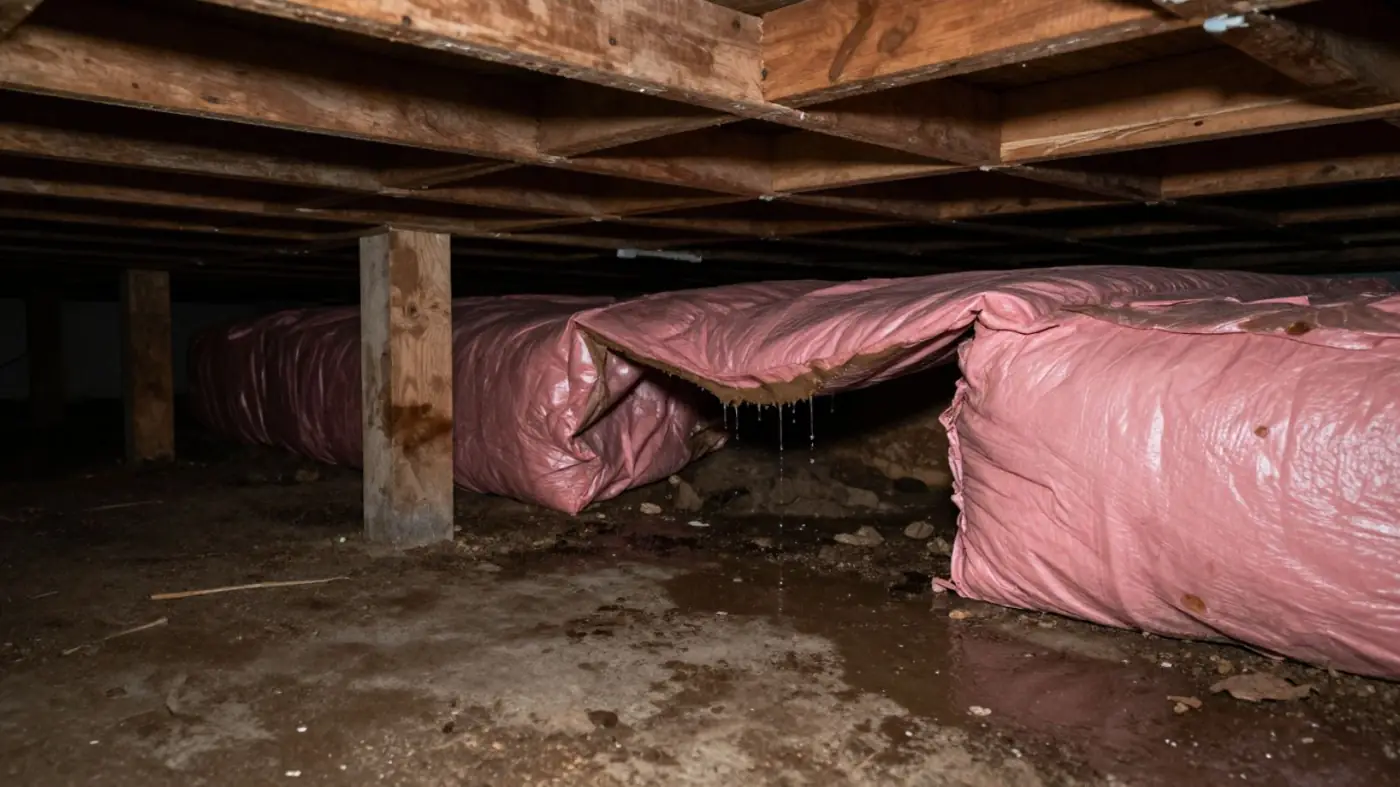
Fiberglass batts that sag or drop between joists are holding water against the floor above.
Standing water or soft soil
A flashlight through the hatch may show a puddle, a wet vapor barrier or soil that squelches underfoot. Look from the opening only.
Rust and beading on ducts
Condensation on metal ducts, hangers and fasteners means humidity under the house has been high for a while.
A torn or bunched vapor barrier
The vapor barrier is the plastic sheet laid over the soil. Water on top of it, or a sheet that is torn, means moisture got in.
How A Wet Crawl Space Is Pumped And Dried
The work is slow and physical because the space is low, tight and wet. Depending on access, drying equipment may sit in the space itself or run from the rooms above.
Safe entry check
The crew checks for live wiring, gas smell, sewage and framing damage before entering, wearing protective gear.
Pump and remove
Submersible pumps and extraction units clear standing water. Soaked insulation is bagged out and a ruined vapor barrier is pulled up.
Dry the framing
Moisture meters check joists and subfloor, and air movers and LGR dehumidifiers pull the water out of the wood. Ducts are inspected for wet wrap.
Verify and document
Readings repeat until the framing is dry. Photos, moisture logs and scope notes are kept for a claim.
Insulation, Vapor Barrier, Subfloor And Ducts After A Soaking
Each part under the floor behaves differently when wet. This is the usual pattern.
| Component | What usually happens | Why |
|---|---|---|
| Fiberglass insulation | Removed when soaked | It holds water against the subfloor and stays wet for a long time |
| Vapor barrier | Reset or replaced | A torn or bunched sheet no longer blocks moisture rising from the soil |
| Joists and subfloor | Dried in place | Solid framing usually dries with air movers and dehumidifiers, checked by meter |
| Flexible ducts | Inspected, often replaced if wet | Wet insulation wrap and liners stay damp inside the duct |
| Pipes and wiring | Referred out | A plumber or electrician judges any damage, not the drying crew |
Your written scope lists each component and the reason it stays or goes.
Crawl Space Safety Steps Before We Arrive
Stay above the floor. These steps help the crew start fast.
Stay out of the space
Standing water, wiring and tight quarters make entry unsafe without gear. Look through the hatch only.
Stop a pipe source
If a supply line is feeding the water, close the main water valve. Say on the call if it will not turn.
Mind the electricity
Switch off power to affected circuits only when the panel is dry and safe to reach. Otherwise leave it and tell the dispatcher.
Clear the hatch
Move boxes, shoes and furniture off the closet or hallway floor so the crew can open the access fast.
Photograph from above
Take pictures of the water, sagging insulation and any stains upstairs. Do not remove anything yet.
Mistakes To Avoid With A Wet Crawl Space
Putting it off is the usual mistake, because out of sight is out of mind. The EPA advises drying water-damaged areas within 24 to 48 hours to prevent mold growth, and a closed space with little airflow dries slowly on its own.
A household fan at the hatch does little. It moves damp air around without pulling water out of wet framing. Sealing the vents or laying fresh plastic over wet soil traps the moisture too, so the source has to be fixed first.
To prevent a repeat, the EPA also lists cleaning gutters and sloping soil away from the foundation. Both steer rain away from the footing instead of under it.
What Affects The Price Of Crawl Space Water Damage Repair
A damp corner and a flooded footprint are very different jobs. These factors set the scope.
Water source and category
A clean supply line break differs from tidal or storm water, which is treated as contaminated and needs more protection and cleaning.
Depth and footprint
The amount of water, and how much of the house sits over it, drives pumping time.
Access
A small hatch and a long crawl slow every step, from pumping to carrying out insulation.
Insulation and barrier removal
The more soaked batts and ruined sheeting, the more labor to bag and haul.
Drying days and equipment
Thick joists and a closed space mean air movers and dehumidifiers run for days.
A broken supply line is the kind of sudden, accidental loss that is often covered. Slow seepage and neglect often are not. Water from a high tide or storm runoff is flood, and the California Department of Insurance says standard homeowners insurance does not cover flood damage. That takes a separate policy, such as one through the National Flood Insurance Program. Check your policy and ask your insurer.
Moisture logs from the joists and photos of the removed insulation show what the water reached.
Want your real number? Call (949) 670-0939 and the scope and price are explained before work starts.
Newport Beach Note: Look Up Your Address Before The Tide
The city publishes a flood zones map and links to FEMA flood map resources, so check both for your address while the weather is calm. Ask the city Building Division whether repairs under the floor need a permit.
Coastal homes in Huntington Beach and Laguna Beach reach the same dispatch line. For the drying stage, see structural drying, and for water that reached living space, see water mitigation.
Crawl Space Questions
Is emergency crawl space water damage available in Newport Beach?
Yes. Calls are taken around the clock, nights and weekends included, and same-day response is offered when available. The dispatcher explains what to expect instead of promising a time. Call (949) 670-0939.
How do I know whether my house has a crawl space?
Look for an access hatch in a closet or hallway floor, or vent grilles along the foundation wall. If neither exists, the home may sit on a slab. A plumber or the original plans can confirm.
Is it safe to go in a flooded crawl space myself?
No. Water, wiring, tight quarters and possible contamination make it unsafe without protective gear. Look from the hatch and let a crew assess it.
Can wet insulation be dried instead of replaced?
Rarely. Soaked fiberglass holds water against the subfloor, so it is usually bagged out and replaced after the framing dries.
Will mold grow under my house after water gets in?
Mold needs moisture, and the EPA advises drying within 24 to 48 hours. If growth is already present, mold remediation follows the ANSI/IICRC S520 standard. Health concerns belong to a physician.
Does insurance cover a crawl space flooded by a high tide?
Usually not under a standard homeowners policy, since flood is excluded and needs separate flood coverage. Check your policy and ask your insurer.