Why Wet Carpet Turns Into a Mold Problem
Carpet is a sandwich: fibers on top, a backing, then a foam or fiber pad, then the subfloor. Water soaks through the first layers in seconds and then sits in the pad, where air barely reaches. That hidden layer is where mold gets its start.
The EPA advises drying water-damaged areas and items within 24 to 48 hours to prevent mold growth. Mold needs moisture, so the clock is really a question of how fast the pad and the floor beneath it get dry. A carpet that feels fine on top can still be wet underneath.
Carpet soaked in the last day or two?
Call (949) 670-0939. Same-day response when available, and the line is open 24/7.
What To Do Inside the Drying Window
Speed matters more than perfection. These four moves cover most of what a homeowner can do before a crew arrives, assuming the water is clean and the electrical panel is safe to reach.
Stop the source
Shut the main water valve or close the door that let the water in.
Pull out the load
Remove furniture, rugs and boxes, and prop wet furniture legs up on foil or plastic.
Get air moving
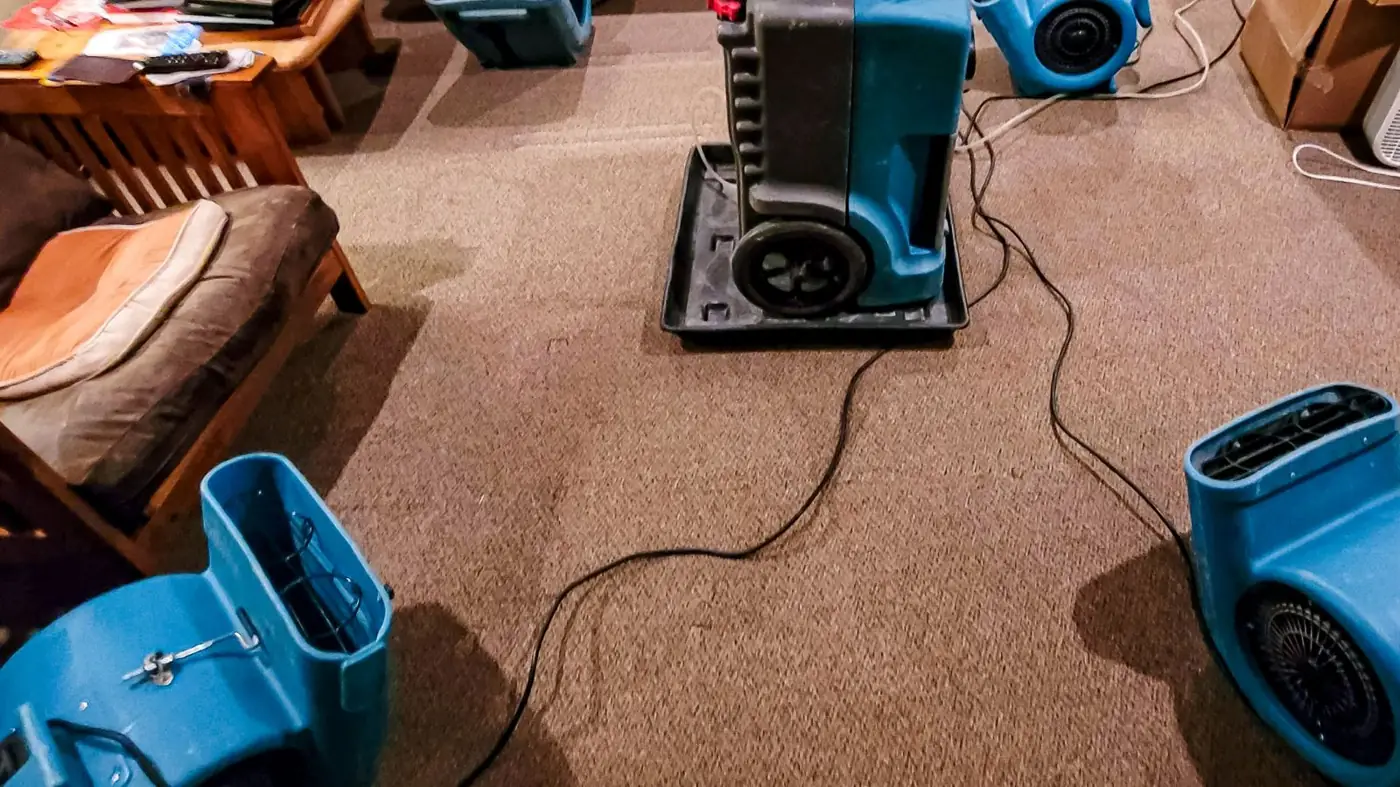
Run box fans and a dehumidifier, and open windows only if outdoor air is drier than the room.
Lift an edge
Peel back a corner at a wall to check whether the pad is soaked, and note the time you did it.
Do not run a regular vacuum on wet carpet, and do not step on soaked areas with shoes that have been outside. If the water came from a sewer backup or another contaminated source, the EPA says to call a professional rather than handle it yourself. Water that arrives from outside the building falls under flood damage restoration, which starts with extraction.
Dry in Place, or Pull the Pad?
This is the call people get wrong most often. Clean water caught early often lets the carpet stay. Anything that sat, soaked the pad, or came in dirty usually does not.
| Situation | Usual outcome | Why |
|---|---|---|
| Clean water, wet for under a day, carpet lifts and dries | Dry in place with air movers and a dehumidifier | Fibers are synthetic and the pad can release water if airflow is strong |
| Pad is saturated and thick | Pull and replace the pad, often save the carpet | Foam pads hold water against the subfloor and dry slowly |
| Wet more than 48 hours, or visible growth on the back | Carpet and pad may need to be thrown away | The EPA notes porous items like carpet may have to be discarded |
| Water came from sewage or floodwater | Remove carpet and pad, then clean the subfloor | Contaminated water is a job for professionals, not a rented fan |
| Wall-to-wall carpet over concrete | Often lifted so the slab can dry | Moisture trapped on a slab keeps the underside wet |
A moisture meter reading on the pad and subfloor, not how the carpet feels, decides which row you are in.
Musty Smell After the Carpet Dries
A musty smell means moisture is still present somewhere. It can come from the pad, the tack strip along the wall, or the bottom plate of the wall itself. Deodorizers cover the smell for a few days and do nothing about the cause.
Surface cleaning with detergent and water is how the EPA says to treat hard surfaces, but carpet is porous and cannot be scrubbed clean once growth is in it. If the smell returns after the room has dried, lift the carpet at a wall and look at the back of it and the subfloor.
Visible growth on a small area of hard subfloor, under about 10 square feet, can usually be scrubbed with detergent and water, then dried completely. Wear an N-95 respirator, gloves and goggles without ventilation holes while you do it, and do not paint or caulk over what you find.
Large areas, or growth that has spread into the wall, are a mold remediation job. Crews use containment barriers and HEPA air scrubbers, and follow the ANSI/IICRC S520 standard. Health questions about mold exposure belong with a physician.
Newport Beach note: King Tides and Harborfront Floors
The city has advised residents that evening high tides called king tides can cause localized flooding in low-lying harborfront neighborhoods, including the Peninsula, Balboa Island, Balboa Village, Newport Island, Finley Tract and Lido Village. If you live there, water can reach your carpet from the outside, with no broken pipe involved. The city also suggests that owners of property next to the harbor install seawall plugs and place sandbags in vulnerable spots.
If tidewater does get inside, start the 24 to 48 hour clock right away. Treat it as contaminated, keep people and pets off it, and call a professional instead of trying to dry a soaked pad with fans. Standard homeowners insurance does not cover flood damage, so check your policy and ask your insurer whether you have separate flood coverage.
Same Process Along the Coast
Carpet behaves the same on any coastal floor. Homeowners in Huntington Beach and Laguna Beach deal with the same pad and subfloor questions after a leak or a high tide. Take photos of the wet area, the moisture readings and any removed material, because they support an insurance claim.
Carpet and Mold Questions
Can mold grow in carpet in 24 hours?
Growth can begin within the 24 to 48 hour window the EPA describes, depending on temperature, the pad and how much air reaches the carpet. That is why drying fast matters more than cleaning later.
Do I always have to replace the carpet pad?
Not always. Pad that was lightly wet with clean water and dried quickly can sometimes stay. A saturated or contaminated pad is normally replaced, because it cannot be cleaned inside.
Should I use bleach on moldy carpet?
The EPA does not recommend routine use of bleach or other biocides. Bleach does not dry the pad or fix the water source. Removal of the affected material and complete drying do the real work.
Do I need a mold test before ripping out carpet?
Usually not. The EPA says sampling is unnecessary in most cases when mold is visible, and there are no federal limits for mold spores. A moisture reading tells you more about what to do next.
My Balboa Island garage and ground floor got wet from a high tide. What do I do in the first 48 hours?
Treat the water as contaminated, stay out of it and photograph the damage. Pull out furniture, get fans and a dehumidifier going if the electrical setup is safe, and call (949) 670-0939 for a crew to extract water and check the pad and subfloor. Ask your insurer whether flood coverage applies.