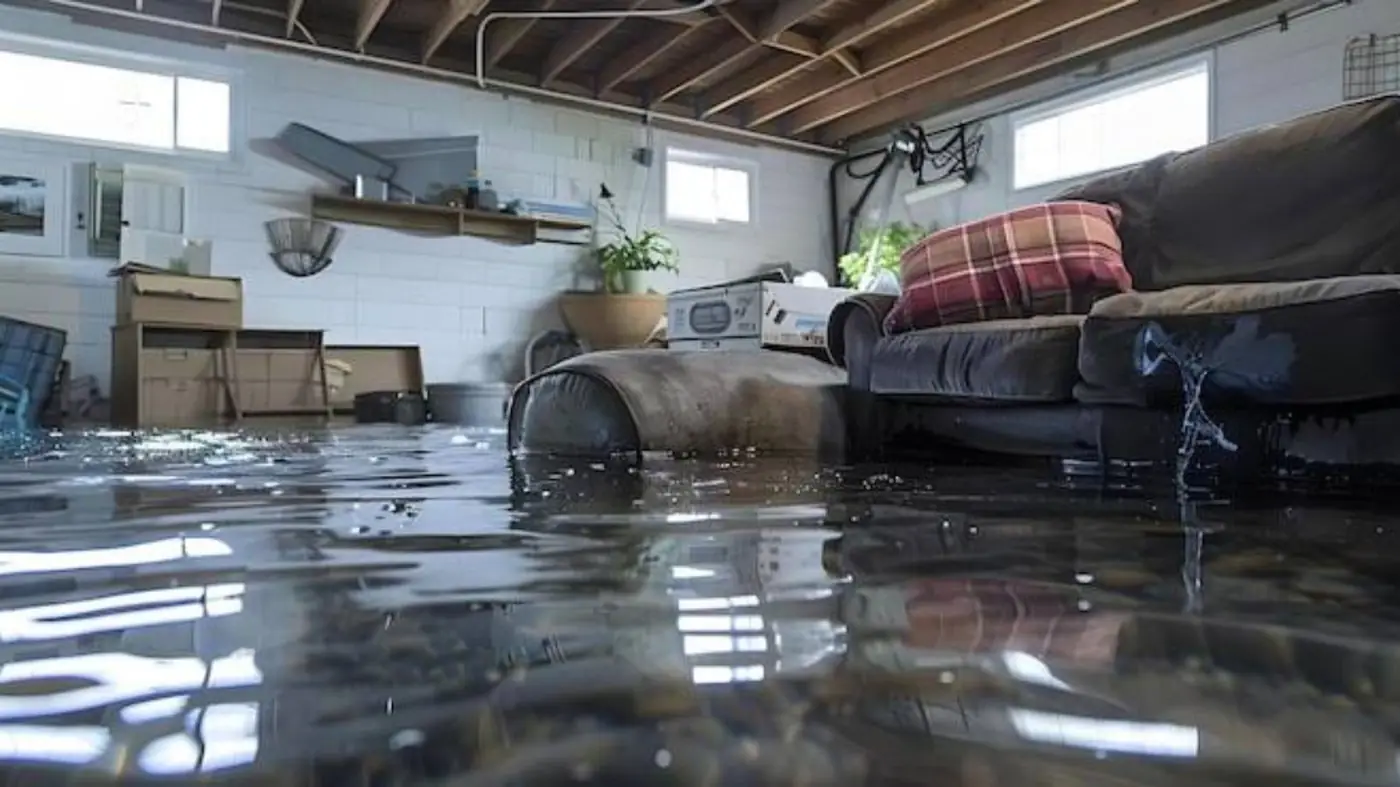
How to treat mold below grade, honestly
Plenty of people search for how to kill mold in a basement, how to remove it from basement walls and how to treat it, and the answers are the same three ideas. Fix the water. Clean or remove what mold is growing on. Keep the space dry afterward. Mold needs moisture, so a plan that skips the first idea only buys a few weeks.
Many Newport Beach homes have no basement at all, so this guide also covers the spaces that behave like one: partly buried lower levels, garages with slab walls against soil, storage rooms under stairs and crawl spaces. If a wall touches earth or a floor sits below the surrounding grade, the advice applies.
Musty smell or wet lower level?
Call (949) 670-0939 for 24/7 dispatch and a written scope before work starts.
Masonry, drywall and wood: what each one needs
The surface under the mold sets the method. Hard, nonporous and sealed surfaces can often be cleaned. Porous ones usually cannot.
| Surface | Typical approach | Practical note |
|---|---|---|
| Concrete, block, brick | Scrub with detergent and water, then dry completely | Efflorescence (white mineral crust) is not mold but signals moisture moving through |
| Painted drywall | Small surface growth may be cleaned and dried, wet or crumbling board is removed | Never paint or caulk over mold |
| Insulation, carpet, ceiling tile | Porous items may need to be thrown away | Photograph before disposal |
| Framing and plywood | Scrub and dry, with removal if deeply affected | Moisture meter readings show when it is dry |
| Stored cardboard and fabric | Often discarded | Move storage onto shelving off the slab |
Skip routine bleach and other biocides. EPA advises against them in most cases. Detergent, water, drying and source repair do the work.
Cleaning a small patch safely
EPA says mold patches under about 10 square feet, roughly 3 feet by 3 feet, can usually be handled by the homeowner. Larger areas, repeat growth, sewage or any wet building material beyond a single patch is professional territory.
Fix the water first
Find the leak, seepage or condensation source, because cleaning without repair brings the growth back.
Protect yourself
Wear an N-95 respirator, gloves and goggles without ventilation holes, and keep other people out.
Scrub and dry
Wash hard surfaces with detergent and water, then dry fast with fans and a dehumidifier.
Discard porous material
Bag ceiling tile, carpet and soft insulation that stayed wet, and avoid painting over stains.
Newport Beach note: low ground, steep ground, paved ground
The city's storm flooding page lists West Newport, the Balboa Peninsula and Newport Bay as low-elevation areas. A lower level or garage there sits close to street level and the bay, so ground moisture and standing storm water are likelier culprits than a plumbing leak. After any flooding, dry the space fast and ask a professional to check inside the wall cavities.
The same page describes steep natural streams in Newport Ridge and Newport Coast, with mudflow risk where homes sit at the base of mountains and below canyons. For a hillside owner, a retaining wall or lower room can take runoff on one side, so keep drains clear and check the uphill wall after heavy rain.
It also notes that San Diego Creek, the main tributary to Newport Bay, was partly channelized in 1968, and that more paving sends more runoff to storm drains. Areas that never flooded can flood if drains were not designed for the higher flows. If your street is newly wet, treat a damp lower room as a warning rather than a one-off.
Garages, storage rooms and crawl spaces
A garage slab can look dry while moisture wicks through it into stored boxes. Lift cardboard onto plastic shelving, leave a gap between boxes and walls, and watch for dark staining at the base of drywall. That bottom edge is where wicking shows first.
A crawl space is harder to judge because few owners look inside. Check with a flashlight for standing water, wet insulation, dirt that is dark and damp, and a musty smell near floor vents. Water under the house can mean a failed drain line, so a moisture meter and a camera inspection tell you more than a guess.
Humidity, dehumidifiers and drainage
EPA recommends indoor relative humidity below 60 percent, ideally 30 to 50 percent. A cheap hygrometer on the wall tells you where you stand. In a closed lower room, a dehumidifier sized for the space and drained to a sink or pump keeps the number steady, and a full bucket means the unit stopped working.
Water usually arrives from outside. Clean gutters so roof water leaves the building, and slope soil away from the foundation so it does not pool at the wall. Keep AC drain lines clear, vent dryers outside and run bath fans. Ask the city Building Division whether regrading or a new drain needs a permit before you dig.
When the job moves beyond homeowner scale
Call a professional for wet walls beyond a single patch, mold in an area larger than about 10 square feet, any sewage or contaminated water, and growth that returns after cleaning. A mold remediation crew sets containment barriers, runs HEPA air scrubbers, removes affected material and dries the structure to the ANSI/IICRC S520 standard. Ask whether the company holds the right state license for the work.
If the room flooded first, flood damage restoration addresses the water before the mold. Owners in Laguna Beach and Huntington Beach deal with the same slab-and-soil moisture. Health questions belong to a physician, not a cleanup guide.
Basement and lower-level mold questions
What is the best way to kill mold in a basement?
Dry it. Mold needs moisture, so repairing the source and drying the surface does more than any spray. Scrub hard surfaces with detergent and water, and EPA advises against routine bleach.
How do I remove mold from basement walls?
On concrete or block, scrub with detergent and water and dry completely. On drywall, small surface growth may be cleaned but wet or crumbling board comes out. Do not paint over mold.
Is a dehumidifier enough?
It controls humidity, not leaks. A dehumidifier helps keep a lower room between 30 and 50 percent relative humidity once the water source is fixed, but it will not dry a wall that keeps taking on water.
I live in West Newport or on the Balboa Peninsula. Does that change my risk?
The city lists both among its low-elevation areas, so lower levels and garages are more exposed to ground moisture and storm water. Check the city's flood zones map for your address, keep drains clear and dry any wet space promptly.
Do I need testing to know whether it is mold?
Usually not. EPA says sampling is unnecessary in most cases when visible mold is present, and no federal limits exist for mold spores. Fix the moisture and clean or remove the material instead.