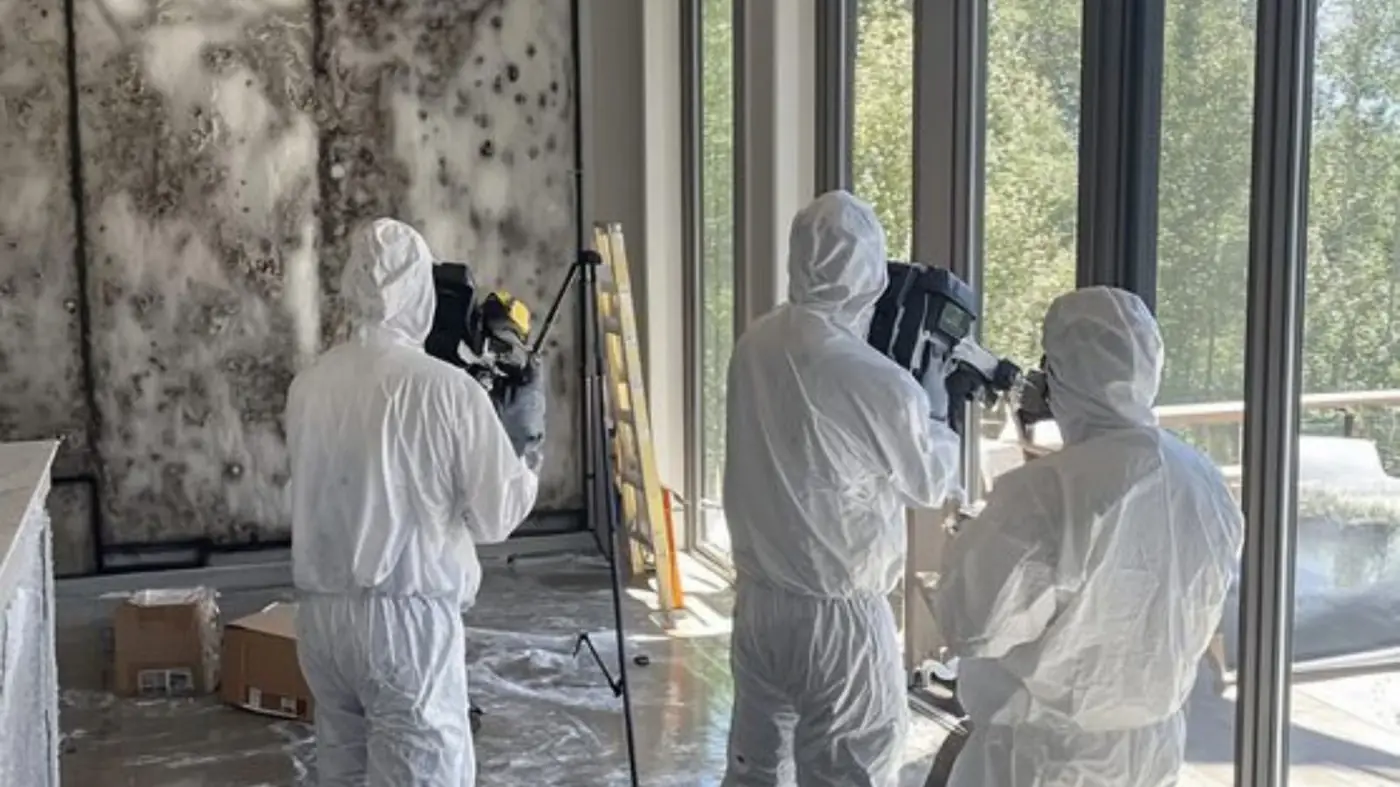
What mold clearance testing is
Clearance testing is an inspection and sampling step done after mold remediation to check whether the work area is back to a normal condition. An assessor looks over the area for visible growth, checks moisture, and may take air or surface samples to compare against outdoor air or an unaffected room.
It is a verification step, not a cleaning step. Remediation removes and cleans. Clearance asks, once that work is finished, whether the space looks and tests the way it should. The result is usually a written report that can go into a sale file.
Mold found before a listing or closing?
Call (949) 670-0939. Dispatch is 24/7, and scope and price are explained before work starts.
Why the tester should be independent
The company that removed the mold should not be the one that certifies the result. A separate assessor has no stake in the remediation scope, so the report reads as a second opinion rather than a company marking its own work. Buyers and lenders may value that separation, though what any of them accepts is their decision.
Hire the assessor before remediation starts when you can. They can write the protocol, which tells the remediation crew what to remove, what to clean and what the finish line looks like. Ask any assessor and any contractor whether they hold the right state license for the work, and for the contractor, check the license on the state licensing board's online lookup.
When clearance makes sense and when it does not
EPA says that in most cases, when visible mold is present, sampling is unnecessary, and no federal limits exist for mold spores. That matters, because results have no pass line set by the government. Clearance still earns its place in some situations.
| Situation | Clearance testing? | Reason |
|---|---|---|
| Small visible patch cleaned by the owner, source fixed | Usually not needed | Visible cleanup and drying are the proof, plus photos |
| Remediation of a larger area before listing | Often sensible | Gives a buyer a neutral written report |
| Buyer or lender asks for it in writing | Ask what exactly they want | Requirements vary, so get the request in writing |
| Mold behind walls after a past leak | Reasonable | Visual checks cannot see inside cavities |
| Visible mold still present | Not yet | Finish remediation first, then verify |
Lender and buyer requirements differ. A clean report does not promise that anyone will accept it, so ask early.
What a clearance report can and cannot tell you
A report is a snapshot of one day. It can show that visible growth is gone, that moisture readings are normal and that sampled air looked like the comparison sample. It cannot say a space will stay dry, and no honest professional says mold will never return. Moisture control after the work is what keeps results holding.
If the report flags a problem, go back to the protocol rather than arguing with the number. A mold remediation crew can reopen the affected area, redo the cleaning or removal and bring the assessor back. Treat a failed check as information about a spot that stayed damp, since the fix is usually to dry and clean that spot again.
Questions about health belong to a physician. A clearance report is a building document, and it says nothing about anyone's wellbeing.
How the process runs from leak to report
The sequence matters. Testing too soon, before the moisture is gone, produces a result that means little.
Fix the water
Repair the source and dry the structure until moisture meters show normal readings.
Remediate
Containment, HEPA air scrubbers and removal of affected porous material follow the S520 standard.
Verify
An independent assessor inspects the area, checks moisture and decides what sampling, if any, is useful.
File the paperwork
Keep the report, the scope, photos and invoices together for the sale.
Newport Beach note: permits, maps and records
The city Building Division, part of Community Development at 100 Civic Center Drive, lists permit processing, FEMA flood maps and elevation certificates on its pages. If remediation involved opening walls or rebuilding, ask the Building Division whether the repair needs a permit, and keep any permit and inspection record with the mold report.
California's Contractors State License Board offers an online license lookup. Run the remediation or repair contractor through it and save a printout of the result in the sale folder. A buyer asking who did the work can then be answered with a name, a scope and a verified license status.
What to keep and what to hand over
Assemble one folder as soon as the work ends. Include the assessor's report, the remediation protocol and scope, before and after photos, moisture logs, receipts and any permit records. A buyer or lender may ask for any of it, and a complete folder shortens the conversation.
Disclosure duties belong to a real estate agent or attorney, so ask them rather than guessing. Do not hide a past problem in a listing. Honest, documented repair usually looks better than a surprise discovered during a buyer's inspection.
How to prepare the house for the assessor
Keep the work area intact until the assessor has visited. Leave containment in place if the protocol says so, stage the area so surfaces can be seen, and give the assessor the moisture logs and the scope. Run dehumidifiers to keep indoor humidity within EPA's suggested 30 to 50 percent range.
If the cause was a leak, the repair that follows is a separate job. Water damage repair rebuilds the walls and floors after clearance, and doing it too early can bury the evidence. Owners in Costa Mesa and Tustin follow the same order of work.
Mold clearance and home sale questions
Does the remediation company do the clearance test?
Usually it should not. An independent assessor gives the report credibility because the company that did the work is not grading itself. Hire the assessor separately from the remediation company.
Will a lender accept a clearance report?
No one can promise that. Lenders and buyers set their own rules. Ask the lender or buyer's agent what they want in writing, and share the report if it fits.
Is sampling always necessary after mold?
No. EPA says sampling is usually unnecessary when visible mold is present, and there are no federal limits for mold spores. Clearance is a choice for larger jobs or a documented-sale situation.
What if I cleaned a small patch myself?
Document it with photos, show the repaired source and dry readings, and keep receipts. EPA says patches under about 10 square feet can usually be handled by the owner.
I'm selling in Newport Beach. Which city office handles permits for repairs?
The city Building Division handles permit processing and inspection scheduling, and its pages also carry FEMA flood maps and elevation certificates. Ask them whether your repair needs a permit and keep any permit record in your sale folder.