Why Laminate Rarely Survives a Soaking
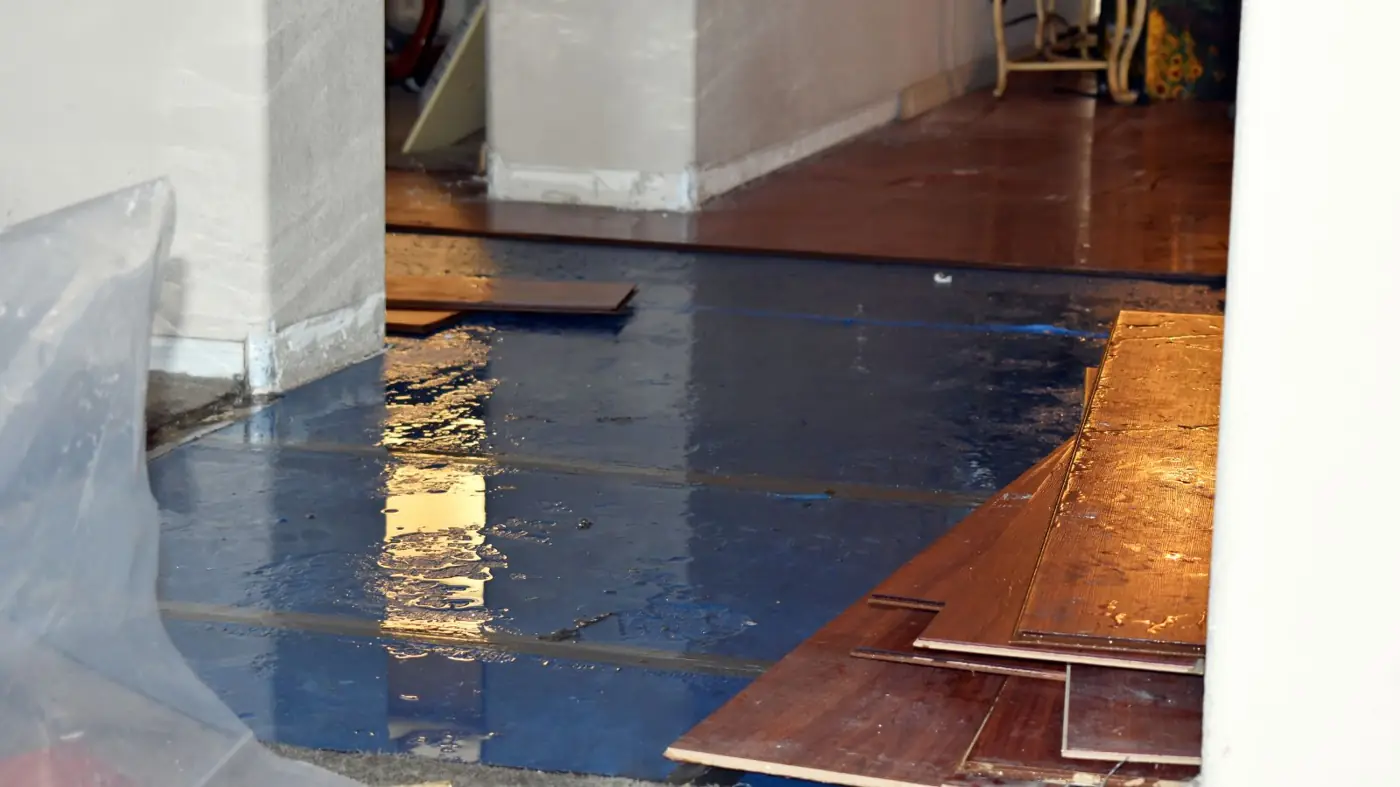
Laminate planks have a thin printed top layer over a core of high-density fiberboard. That core is the weak point. Once water enters through a seam or a cut edge, the fibers swell, and swelling is permanent.
The click-lock edges make it worse. Water slips between planks, soaks the underside and then has nowhere to go, so the surface can look fine while the back of the plank sits wet against the subfloor.
Laminate lifting after a leak?
Call (949) 670-0939. 24/7 dispatch, same-day response when available.
Signs of Water-Damaged Laminate
Damage usually reveals itself in this order.
Swollen edges
The plank seams rise into small ridges you can feel with a bare foot or a sock.
Peaking
Planks push against each other and rise into a tent shape at the seam.
Cupping or bowing
Edges curl up or the middle sags, a sign the underside got wetter than the top.
Peeling top layer
The decorative layer separates from the core and peels at corners.
Dark seams and odor
Dark lines and a damp smell mean moisture is trapped beneath the planks.
What to Do Right Now
Stop the water, then get it off the floor. Mop or wet-vac standing water, lift rugs and furniture, and keep people off the area so wet planks do not buckle or break. Open windows and run fans across the floor.
Clean water from a supply line or appliance can sometimes be handled before swelling sets in, and emergency water removal crews use extraction units to pull the water out of seams and padding. Floodwater, sewage or anything that came in from outside is different. Treat it as contaminated, keep out of it and let a professional decide what comes up.
Photograph the floor from standing height and close to the seams before anything is lifted. Those photos and later moisture logs support an insurance claim, and your policy and insurer decide what is covered.
Remove Planks or Dry in Place
The planks themselves are often disposable. What matters most is the subfloor underneath them.
| Situation | Planks | What to do |
|---|---|---|
| Small spill, wiped up within hours | Often fine if edges stay flat | Dry the surface and check seams for swelling |
| Edges swollen or peaking | Rarely recover | Remove the damaged run and dry the subfloor |
| Standing water for a day or more | Replace | Pull planks, dry the subfloor and underlayment |
| Floodwater or sewage | Discard | Call a professional before touching it |
| Click-lock planks only wet near one wall | Sometimes the affected row can be unlocked | Remove back to dry planks |
Planks over a concrete slab trap moisture differently than planks over plywood. Measure both.
Drying the Subfloor Properly
The subfloor decides how soon you can install anything new. Plywood and particleboard hold water, and concrete slabs release moisture slowly. A moisture meter reading on the subfloor, compared with a dry area of the same house, tells you when it is ready.
Removal goes better with a plan. Start at a dry edge, unlock planks one row at a time rather than prying, and label the order if you hope to reuse any. Bag swollen planks, pull the underlayment if it is wet and leave the subfloor bare to air. Then test it, because dry-looking plywood can still read wet.
Pros use air movers along the surface, a dehumidifier to pull water from the air and sometimes injected-air systems for wet padding or underlayment. They follow the ANSI/IICRC S500 standard and record readings each visit. Close the floor over a damp subfloor and you will see mold, odor or new buckling within weeks. The EPA's 24 to 48 hour drying guidance exists for that reason.
If the planks are the floating kind and only part of the room is wet, a crew may unlock the click-lock planks and pull them in a controlled way, which keeps good planks and exposes the wet area faster. Our flood damage restoration service covers floors after larger events.
Newport Beach Note: King Tides and Lower-Level Floors
The city's king tide advisory warns that evening high tides can cause localized flooding in low-lying harborfront neighborhoods, including the Peninsula, Balboa Island, Balboa Village and Lido Village. If your laminate is on a ground floor or garage-level room in one of those areas, a single flooded evening can soak every plank edge at once.
The city suggests owners of harbor-side property install seawall plugs and place sandbags in vulnerable spots. Prefilled sandbags are at the City Corporation Yard (592 Superior Avenue), with unfilled bags at city fire stations. If your laminate sits at that level, that advice is easier than replacing the floor. Water coming up from the street or bay should be treated as contaminated, so call a professional before pulling any planks.
Laminate Mistakes That Cost a Floor
Most replacements trace back to one of these.
- Walking on swollen planks until the locks snap.
- Using a heat gun or space heater to speed drying.
- Laying new planks over a subfloor that still reads wet.
- Waiting for the planks to flatten on their own.
- Covering damp floors with rugs that trap moisture.
When to Call a Restoration Crew
Call when water covered more than a small area, when it came from outside or a drain, when planks are lifting or when you cannot tell how far the moisture traveled under the floor. A crew's moisture mapping is often the difference between replacing one room and replacing three.
The same floor problem turns up in Huntington Beach and Costa Mesa. For Newport Beach, call (949) 670-0939 and licensed and insured professionals can be sent, with same-day response when available. The scope and price come before the work.
Laminate Floor Questions
Can swollen laminate go back to normal?
Almost never. The fiberboard core swells permanently, so swollen planks are usually replaced.
Is water-damaged laminate safe to leave in place?
Not if the subfloor is wet. Trapped moisture can lead to odor and mold growth, and health questions belong to a physician.
How long does a subfloor take to dry?
It depends on material and how wet it got. Plywood may dry within days with equipment, while concrete can take longer. Meter readings decide.
Can I replace only the damaged planks?
Often yes, if the floor is click-lock and the rest is dry. A matching run and flat subfloor are required.
Are harbor-front homes in Newport Beach at special risk for floor damage?
The city's king tide advisory names harborfront neighborhoods like Balboa Island and the Peninsula for localized flooding. Ground-level flooring there deserves a plan, and the city's sandbag and seawall-plug suggestions are worth reading.