What People Mean by Black Mold
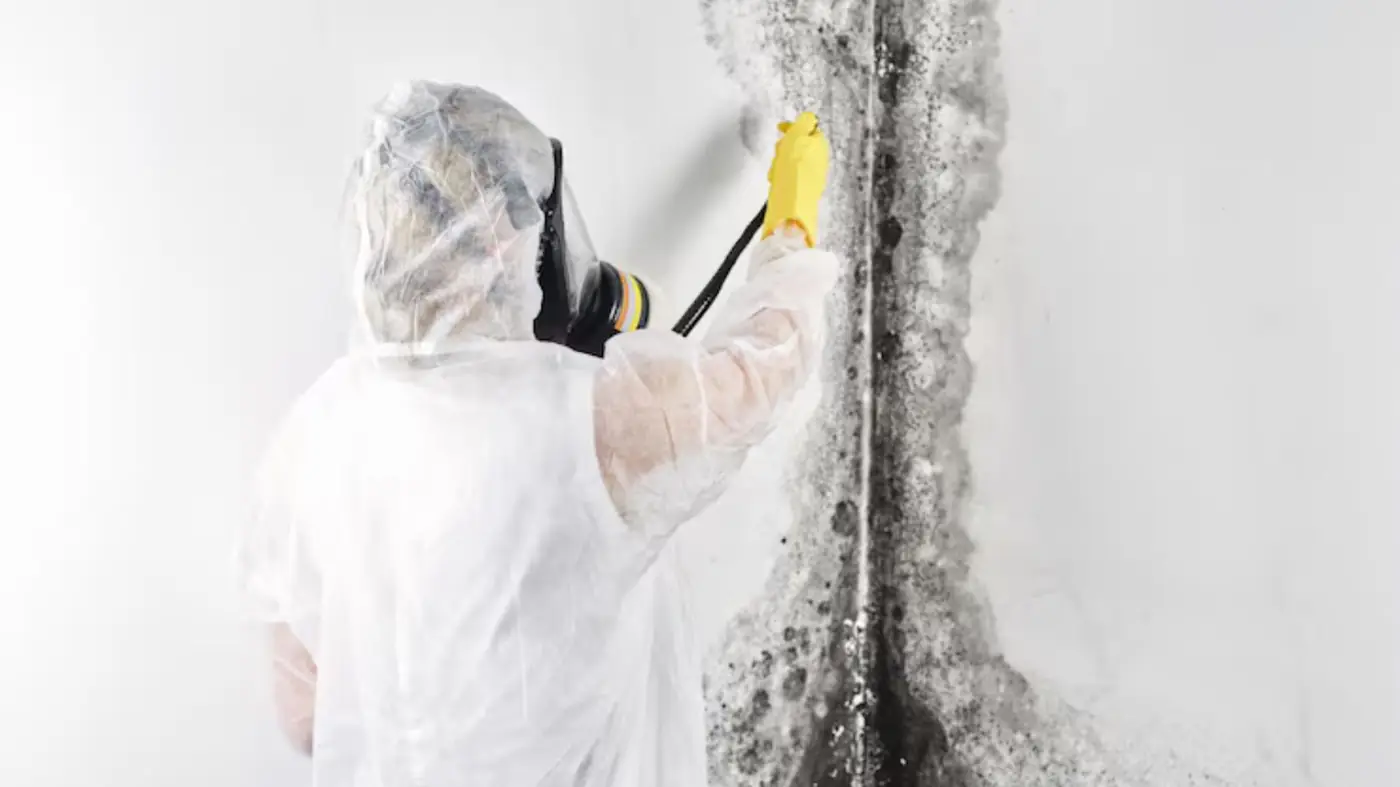
Most people who search this phrase mean any dark green, gray or black growth on a wall, grout line or ceiling. Black is a color, not a species. Many different molds look dark, and you cannot name one by eye.
That matters because the removal method does not depend on the name. It depends on the size of the area, the material underneath and whether water is still getting in. Nobody can diagnose a health effect from a photo, and health questions belong to a physician.
Growth across a wall, or on soaked drywall?
Call (949) 670-0939 to talk it through. 24/7 dispatch, same-day response when available.
Small Patch or Professional Job?
The EPA uses roughly 10 square feet, about a 3 by 3 foot square, as the point where a homeowner can usually handle cleanup. Use the table to place your situation.
| What you have | Who usually handles it | Reason |
|---|---|---|
| Under 10 square feet on tile, grout, sealed wood or glass | You, with protective gear | Hard surfaces can be scrubbed and dried |
| Under 10 square feet on drywall, ceiling tile or carpet | You may cut out and discard, or call a crew | Porous materials may need to be thrown away, not cleaned |
| More than 10 square feet, or several rooms | A remediation company | EPA points to its commercial guidance for larger areas |
| Growth after significant water damage | A crew that also dries the structure | Cleaning without drying leaves the cause in place |
| Sewage or other contaminated water involved | A professional only | The EPA says to call a professional for contaminated water |
If you are unsure whether the area has crossed the line, assume it has and ask for a moisture reading before touching it.
Removing Mold From a Hard Surface
Follow the order. Skipping the first step is the main reason mold comes back to the same spot.
Wear an N-95 respirator, gloves and goggles without ventilation holes. Seal the room door with plastic sheeting if you can, and keep other people and pets out until you finish.
Fix the water problem
Repair the leak, clear the drain or reduce humidity, or the surface will get wet again.
Scrub with detergent
Use detergent and water with a stiff brush on tile, grout or sealed wood, in small sections.
Dry completely
Wipe, then run a fan or dehumidifier until the surface is fully dry. The EPA target for indoor humidity is 30 to 50 percent.
Bag and discard
Seal sponges, rags and any removed material in plastic bags, then wash your hands and clothes.
Cutting out a small section of drywall or ceiling tile is reasonable if the patch is under 10 square feet and the material underneath is dry. If the wall feels cool, soft or damp, or the area keeps growing, stop. Wet framing and insulation are a water mitigation problem first and a cleaning problem second.
What Not To Do
Do not routinely use bleach or other biocides. The EPA advises against it, and bleach can leave a wet surface behind on porous material. Do not paint or caulk over mold, because the coating hides the problem and traps moisture.
Do not dry-brush or sand a moldy area, which throws dust into the air. Do not mix cleaning products, since some combinations release harmful fumes. Do not pay for spore sampling as a first step, because the EPA says sampling is unnecessary in most cases when mold is visible, and there are no federal limits for mold spores.
Signs the Job Is Bigger Than a Scrub
Call a professional when the area passes 10 square feet, when it returns after you cleaned it, when you see it on both sides of a wall, or when the cause was a pipe, a roof leak or a flood. Hidden growth often announces itself with a musty smell and no visible source. Behind baseboards, inside a cabinet back or above a ceiling are common hiding spots.
A mold remediation crew will do a walkthrough, take moisture readings with a meter and a thermal imaging camera, and write a scope. Containment barriers, negative air with a HEPA air scrubber and removal of affected materials follow the ANSI/IICRC S520 standard for mold remediation. Ask any company whether its crews work to it.
Removal itself is mostly about taking out what cannot be cleaned. Affected drywall, insulation and carpet are cut out, bagged in the work area and carried out, then the framing is cleaned and dried before anything is rebuilt. Homeowners in Tustin and Irvine hit the same decision point.
Newport Beach note: Older Homes and Checking a Contractor
The city's housing plan says the majority of its housing stock was built before 1980, and about 41.3 percent of homes date from 1960 to 1979. Older plumbing, older bathroom ductwork and old roofing are common moisture sources in houses that age, so look for a leak before you blame cleaning habits. The same plan notes that housing over 30 years old typically needs some major rehabilitation.
Before you hire anyone, check the contractor's license on the state licensing board's lookup. Ask whether the company holds the right state license for the work, and get the scope in writing. A company that cannot explain its scope and price before work starts is not one to hire.
Removing Black Mold Questions
Is black mold always toxic?
No claim of that kind can be made from color. Dark growth can be many different molds. Remove it and fix the moisture either way, and bring any health concerns to a physician.
Can vinegar or bleach remove black mold?
The EPA's guidance is detergent and water on hard surfaces, followed by thorough drying. The agency does not recommend routine bleach or other biocides. Vinegar is not part of that guidance.
What if the mold keeps coming back after I clean it?
Moisture is still getting there. Look for a slow plumbing leak, a roof or window leak, a missing exhaust vent or humidity above 50 percent. A moisture meter and thermal imaging help find hidden sources.
Do I need a mold test before removal?
Usually not. When mold is visible, the EPA says sampling is generally unnecessary. A crew will want moisture readings and a written scope, not a petri dish.
How do I check a mold or restoration company in Newport Beach?
Look up the contractor's license on the California state licensing board's online lookup and ask whether the company holds the right state license for the work. Ask if crews work to ANSI/IICRC S520 and request a written scope with the price explained before work begins.