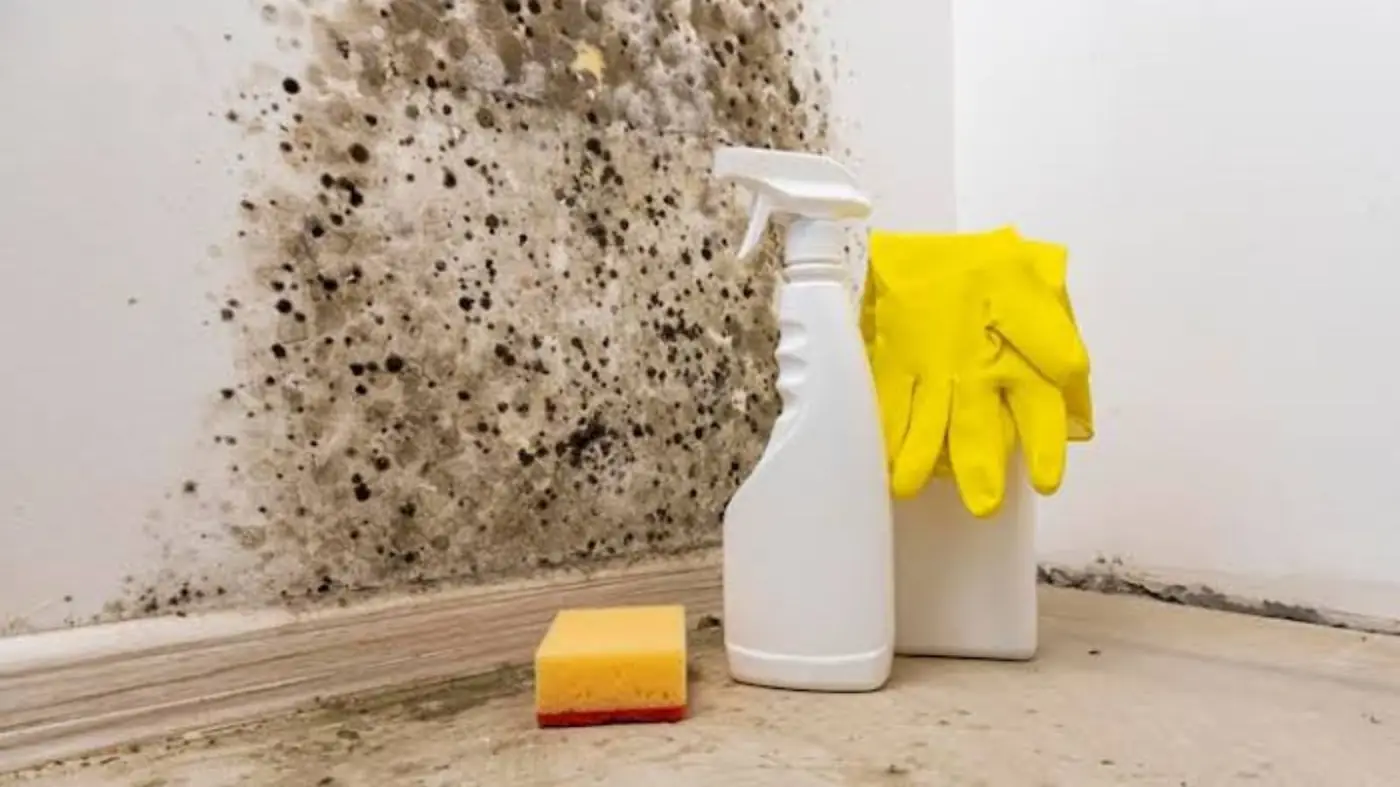
Killing Mold Versus Removing It
Searching for how to kill mold usually means one thing: you want it gone and not coming back. The trouble is that dead mold is still mold. Dead spores and fragments stay on the surface, and they are still there when you wipe away the cleaner.
That is why the EPA frames the job as cleaning and removal. You physically take the growth off a hard surface, or you remove the material if it is porous. Then you dry everything, and you fix whatever supplied the water.
Mold behind a wall or under flooring?
Call (949) 670-0939 and tell the dispatcher what you found. The line is open 24/7.
Why Bleach Is Not the Routine Answer
The EPA does not recommend routine use of bleach or other biocides on mold. Bleach tends to stay on the surface of porous material like drywall, and the water in the mix can leave the material wetter than before. The mold you do not see keeps growing in the part that stayed damp.
What the agency does recommend for hard surfaces is plain: scrub with detergent and water, then dry completely. Wear an N-95 respirator, gloves and goggles without ventilation holes while you do. In most cases where mold is visible, sampling is unnecessary, so you do not have to identify the mold before cleaning it.
What To Do Based on What the Mold Is Growing On
The surface decides everything. A tile wall and a ceiling tile may look equally moldy, but only one can be scrubbed clean.
| Material | Can it be cleaned? | What to do |
|---|---|---|
| Tile, glass, metal, sealed countertop | Yes | Scrub with detergent and water, wipe, dry fully |
| Painted wood trim or framing | Often | Scrub, dry and check moisture in the wood before closing it up |
| Drywall and ceiling tile | Usually not | Cut out and discard the affected piece if the patch is small, or call a crew |
| Carpet, pad and upholstery | Usually not | Porous. The EPA says these may have to be thrown away |
| Insulation | No | Remove and replace after the cavity is dry |
Never paint or caulk over mold. A fresh coat hides the patch and holds moisture against the surface.
Where the Moisture Usually Comes From
Most repeat mold traces back to a short list of causes. Check under sinks for a weeping trap or supply connector, around a window for a leaking frame, and along an exterior wall for a roof or gutter overflow. Look at the AC drain line too, since a clogged line drips into the ceiling or closet.
Run a hand along the baseboard after a shower or after rain and feel for cool, damp spots. A pinless moisture meter makes this faster, and a thermal imaging camera shows the damp area as a cooler patch. Condensation on cold surfaces counts as a source too, so a mirror that stays fogged for a long time points at weak ventilation.
A Four-Step Plan That Actually Works
Follow this order for any patch under about 10 square feet (roughly 3 by 3 feet). The EPA says larger areas, or those from significant water damage, are for the commercial remediation guidance.
Stop the water
Fix the drip, vent the fan outdoors and clear the AC drain line.
Remove the growth
Scrub hard surfaces. Bag porous material that is affected and discard it.
Dry it out
Use fans and a dehumidifier. Aim for 30 to 50 percent indoor humidity, and keep it below 60 percent.
Inspect and monitor
Look at the area weekly. A return of growth means moisture is still present.
No product makes it impossible for mold to return, because mold needs only moisture and a surface to grow on. Keeping water away is the lasting fix. That means roof gutters that drain, soil that slopes away from the foundation, dryers that vent outdoors and AC drain lines that stay clear.
When Killing It Is Not Enough
If the mold sits on a wall that was wet from a pipe, the surface patch is the visible part of a larger job. Wet insulation and framing need to be dried to a target moisture reading, using air movers and an LGR dehumidifier, before anything is closed up. That is the work of water damage cleanup done to the ANSI/IICRC S500 standard.
Areas bigger than 10 square feet, or mold that returned after a careful cleaning, belong with mold remediation crews. They work under containment barriers with HEPA air scrubbers, following the ANSI/IICRC S520 standard. For health concerns, ask a physician. Homeowners in Costa Mesa and Huntington Beach use the same rule: if you cannot dry it, do not just clean it.
Newport Beach note: Shared Walls, Shared Plumbing
Newport Beach has about 44,800 housing units, and 34.5 percent of them are in multi-unit buildings. In condos and apartments, walls, ceilings and drain stacks are shared, so a neighbor's leak can feed mold on your side without any fault of yours. If the stain keeps coming back after you fixed everything in your own unit, the source may be next door or above.
Tell the building manager or HOA in writing, with dated photos, and ask for the neighboring unit and common plumbing to be checked. A moisture meter on your side of the wall shows whether it stays wet. Check your policy and ask your insurer how your coverage treats water that comes from another unit.
Killing Mold Questions
Does vinegar kill mold?
Some people use it, but it is not part of the EPA guidance. Detergent and water, followed by complete drying, is the recommended method for hard surfaces.
Will killing mold make my home safe?
Cleaning removes visible growth, but safety questions and health concerns belong to a physician. For the building, the lasting step is removing moisture and keeping humidity between 30 and 50 percent.
Is it ever okay to use bleach?
The EPA says not to use it routinely, and detergent plus water is enough in most cases. If you are told to disinfect after a specific event, ask the professional handling the job what is appropriate for the material.
Can mold come back after remediation?
Mold needs moisture, so any new leak or damp area can start it again. Remediation done to the ANSI/IICRC S520 standard removes the growth, and moisture control is what keeps the result in place.
I live in a Newport Beach condo and mold keeps appearing on a shared wall. Who do I call?
Report it to your building manager or HOA with dated photos so the unit next door and the shared plumbing can be checked. If there is standing water, a soft wall or a growing patch, call (949) 670-0939 and a crew can take moisture readings.