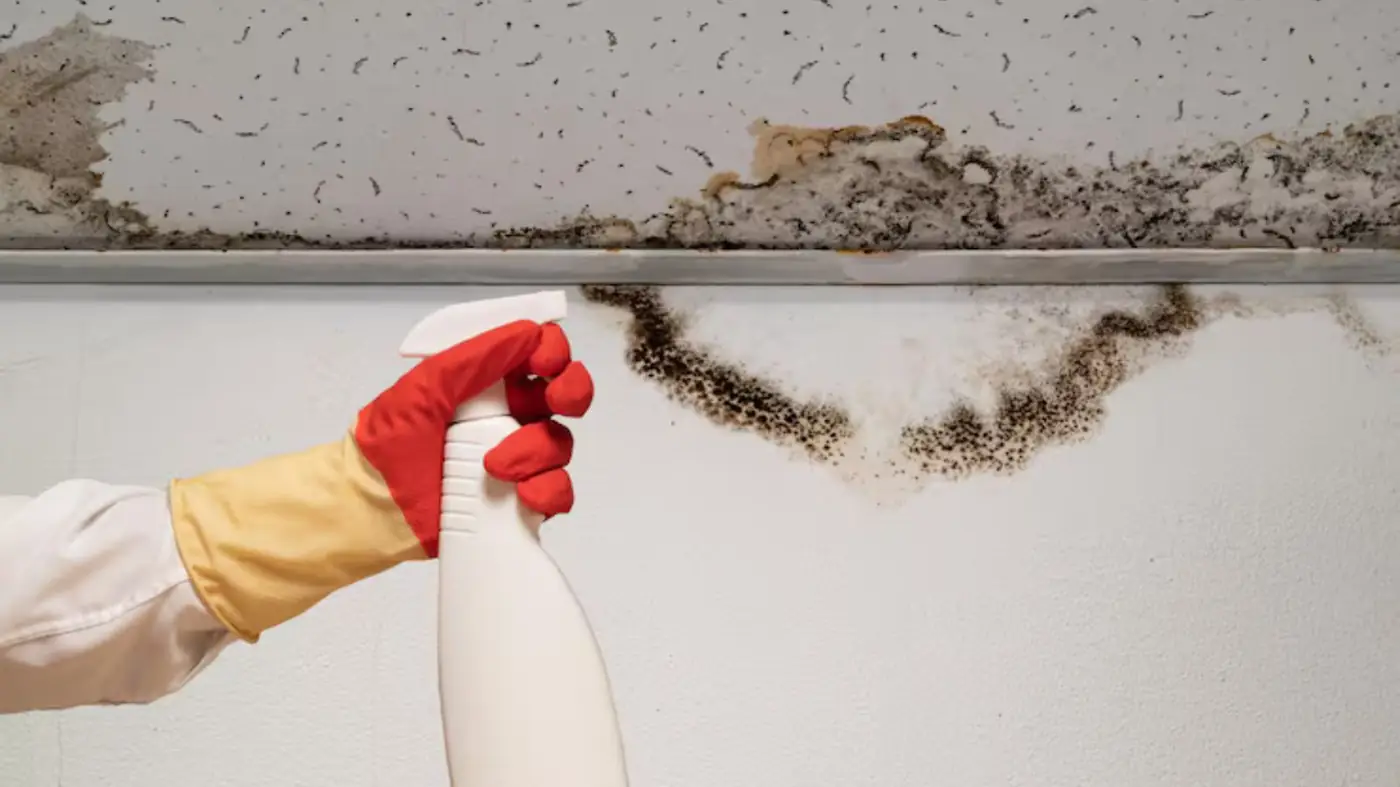
What Black Spots on a Bathroom Ceiling Mean
Black mold on a bathroom ceiling is a surface growth that feeds on moisture. The ceiling is the coldest, least ventilated spot in the room, so warm shower air condenses there every morning. Over weeks, that film of water is enough for spots to appear.
Dark patches do not tell you the source. They can come from steam alone, from a supply line or roof leak above, or from a bath fan that dumps its air into the attic. Before you scrub anything, work out where the water is coming from.
Ceiling soft, stained brown, or dripping?
Call (949) 670-0939 to describe it. Same-day response when available, 24/7 dispatch.
Steam, Cold Surfaces and an Undersized Fan
A ten minute hot shower puts a surprising amount of vapor into a small room. That vapor lands on the ceiling, the mirror and the exterior wall, wherever the surface is cooler than the air. Paint that never fully dries between showers holds the dampness against the drywall.
Fans are rated in cubic feet per minute (CFM), and the rating is printed on a label inside the housing or on the grille. A common rule of thumb is about 1 CFM per square foot of floor for a small bathroom, so a 5 by 8 foot room needs roughly 40 CFM at the very least. Older fans often move far less once the duct is crushed or clogged.
Check where the duct ends. A fan that vents into the attic or a soffit instead of outdoors returns the moisture to the building, and the underside of the roof sheathing can grow mold too. EPA advice is to run bath fans and vent them outside, and to keep indoor humidity between 30 and 50 percent.
Condensation or a Leak From Above?
The pattern of the stain is your best clue. Use this table before you buy cleaning supplies, because a leak means the fix is a repair, not a scrub.
| What you see | What it usually points to | What to do |
|---|---|---|
| Speckled dark spots in the corners and over the shower, ceiling dry and firm | Condensation from steam and a weak fan | Clean the small patch, run the fan longer, check the duct |
| Brown ring with a darker edge, even after a dry week | A leak above that wets and dries repeatedly | Find the source first. Plan to open the ceiling to check the drywall |
| Stain that grows after the upstairs shower or toilet is used | Supply, drain or tub overflow leak from the floor above | Stop using that fixture and call a plumber, then dry the cavity |
| Stain that grows only after rain | Roof or flashing leak | Get the roof checked and dry the ceiling cavity |
| Soft, sagging or bubbling paint | Drywall holding water | Treat it as wet drywall. Do not poke or paint over it |
A moisture meter and a thermal imaging camera show wet drywall that looks normal from below. They are how a crew confirms what a stain cannot.
Cleaning a Small Patch Yourself
The EPA says mold patches smaller than about 10 square feet (roughly 3 by 3 feet) can usually be handled by the homeowner, as long as the surface is hard and the water problem has been fixed. Larger or recurring areas are a different job.
Protect yourself first. Wear an N-95 respirator, gloves and goggles without ventilation holes, and keep the fan running with the door cracked.
Fix the water first
Repair the leak or improve the fan before cleaning, or the spots return to a damp ceiling.
Scrub with detergent
Use detergent and water on a sponge or cloth, and work in small sections without soaking the drywall.
Dry it fully
Wipe with a dry towel, then run the fan or a small air mover until the surface feels dry to the touch.
Watch it for a month
If the spots show up again, moisture is still getting there and the source needs a closer look.
The EPA does not recommend routine bleach or other biocides, and it advises against painting or caulking over mold. Painting over a stain hides it while the moisture keeps working underneath. Areas too large or too wet for a home cleanup are handled by mold remediation crews.
When the Drywall Has to Come Down
Stop scrubbing and call if the ceiling is soft, sagging, stained brown, or if the patch is bigger than about 10 square feet. Porous material such as ceiling texture and paper-faced drywall that stayed wet past the 24 to 48 hour drying window may need to be thrown away. Cleaning the paint layer does not dry what is behind it.
A crew starts with a moisture meter and a thermal imaging camera to map the wet area. They then cut out only the affected section, set containment barriers with a HEPA air scrubber running, and dry the cavity with air movers and a dehumidifier. Work like this follows the ANSI/IICRC S520 standard for mold remediation, and it is fair to ask any company whether its crews do.
If the leak itself is a supply line or a failed tub drain, the same visit can cover water damage repair for the ceiling and framing once the area is dry. Sampling is usually unnecessary when mold is visible, according to the EPA, so air tests are rarely needed just to start the work.
Newport Beach note: If You Rent, Report It in Writing
In Newport Beach, 43.5 percent of occupied homes are renter-occupied, which is a large share of bathrooms where the ceiling and plumbing belong to someone else. EPA guidance for renters is to report leaks and moisture problems to the building owner or manager. Do it in writing, with dated photos of the stain, so there is a record of when you noticed it.
Describe only what you see: location, size, and whether it grows after a shower or after rain. Questions about who pays belong with your lease and your insurer.
The Same Steps Work Across Orange County
Bathroom ceilings behave the same in any home with a hot shower and a weak fan. Homeowners in Costa Mesa and Irvine follow the same order: find the source, dry it, then clean what is left. If anyone in the household has health concerns about mold, that question belongs with a physician.
Bathroom Ceiling Mold Questions
Is black mold on a bathroom ceiling dangerous?
Black is a color, not a diagnosis. Many molds look dark, and only a lab can name a species. The practical response is the same either way: stop the moisture, clean or remove the material, and dry it. Health questions belong to a physician.
How big does a fan need to be?
Look for the CFM rating on the label and compare it to your floor area, using about 1 CFM per square foot for a small room as a starting point. Make sure the duct is not crushed and ends outdoors. A strong fan on a bad duct still fails.
Can I just paint over it with stain-blocking primer?
No. The EPA advises against painting over mold, and a primer does nothing about the water. If the ceiling is still damp behind the paint, the spots come back through the new coat.
How do I know the drywall is wet if the surface looks fine?
You often cannot tell by eye or by touch. A pin or pinless moisture meter reads moisture inside the board, and a thermal camera shows cool damp zones. A visit includes a walkthrough, moisture readings and a written scope.
I rent an apartment in Newport Beach. Who should I tell about ceiling mold?
Tell the building owner or manager, in writing, with dated photos. Do not cut into the ceiling yourself. If the water source is the unit above, say so in the report. Call (949) 670-0939 if the ceiling is sagging or dripping and you need to know what a crew would do.